
Blends
What Is the Deadpool Blend? BPC-157, TB-500 and Cartalax, Explained
SB
· 6 min read
A summary of published research, with citations. It states no amount, schedule or route, and makes no claim about what this compound does in a person. Supplied for laboratory research use only.
On this page · 9 sections
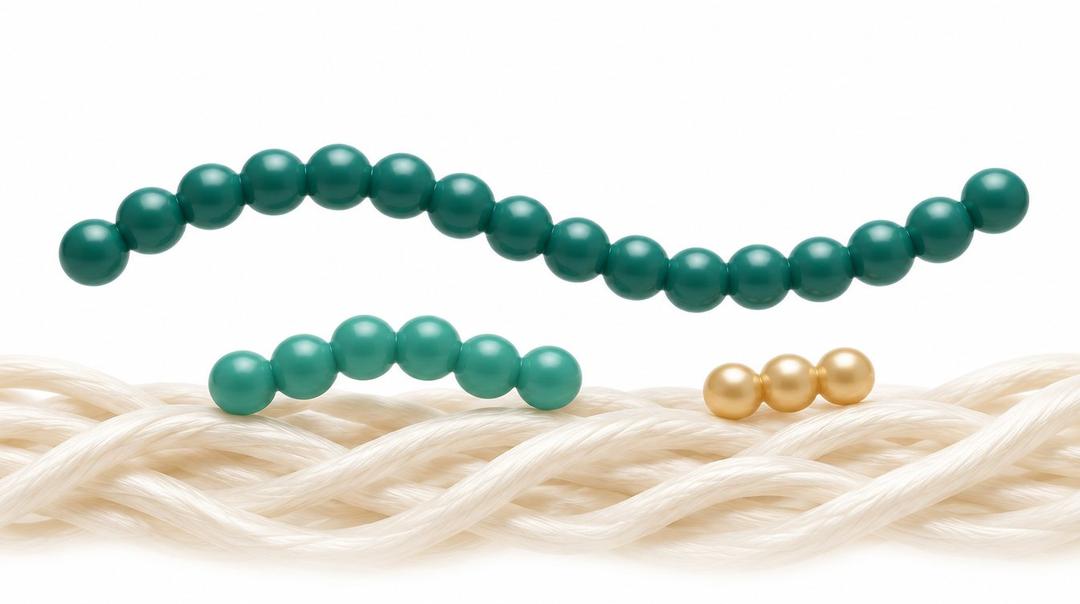
The Deadpool Blend is a research blend of three peptides in one vial: BPC-157, TB-500 and Cartalax, 10 mg of each, 30 mg in total. It is the Wolverine Stack (BPC-157 and TB-500) with a third, much shorter peptide added: Cartalax, the tripeptide Ala-Glu-Asp from the Khavinson series of peptide bioregulators. The name is a product name, not a scientific one, and the combination has never been studied. This article explains what each component is, how far its evidence goes, and why a blend can carry no more evidence than its parts.
What is in the Deadpool Blend?
| Component | Amount per vial | What it is | Evidence stage |
|---|---|---|---|
| BPC-157 | 10 mg | A 15-amino-acid peptide from a gastric protein sequence | Animal, mostly one research group |
| TB-500 | 10 mg | A seven-amino-acid fragment of thymosin beta-4 | Very little of its own |
| Cartalax | 10 mg | The tripeptide Ala-Glu-Asp, a Khavinson bioregulator | Cell culture, one research group |
The three are equal by weight. Because they differ so much in length, that is not equal by number of molecules: a milligram of a three-residue peptide contains several times more molecules than a milligram of a fifteen-residue one. No study has examined these three together, in this or any proportion.
BPC-157
BPC-157 is a synthetic 15-amino-acid peptide whose sequence comes from a protein found in gastric juice. Its literature is large but almost entirely preclinical, mostly rodent studies of the gut, tendon, ligament, muscle and bone, and most of it comes from one group in Zagreb. An October 2026 review for orthopaedic surgeons by Tham, Hodgkins and Kennedy found that human musculoskeletal evidence amounts to one small, uncontrolled case series, and that routine clinical use cannot be recommended (PMID 42937313). More in what BPC-157 is.
TB-500
TB-500 is sold as a short fragment of thymosin beta-4, the 43-amino-acid peptide best known for binding actin. The same review describes it as a distinct seven-amino-acid fragment that is frequently confused with full-length thymosin beta-4, with no validated biological or clinical equivalence between the two. That matters because most "TB-500" research is really research on the full protein. See what TB-500 is and TB-500 vs thymosin beta-4.
Cartalax
Cartalax is the tripeptide Ala-Glu-Asp, sometimes written AED or T-31, one of the short "peptide bioregulators" proposed by Vladimir Khavinson's group in St Petersburg. The group's hypothesis is that peptides this short enter cells and influence gene expression directly. Its published work is cell culture:
- In ageing cultures of human mesenchymal stem cells, Ashapkin and colleagues reported that AED and two related short peptides changed the expression of genes including IGF1, FOXO1, TERT and NFκB (PMID 32399807).
- In ageing skin fibroblast cultures, Lin'kova and colleagues reported changes in markers of proliferation and apoptosis with AED and related peptides (PMID 27259496).
- In stem cells from human periodontal ligament, Caputi and colleagues studied AED with other bioregulator peptides and markers of neuronal differentiation (PMID 30791821).
This is a small literature, almost entirely from the group that proposed the series and its collaborators, with no controlled animal or human studies of Cartalax on its own. The same caution applies to the rest of the series, covered in what Pinealon is and what Epitalon is.
Deadpool Blend vs the Wolverine Stack
| Blend | BPC-157 | TB-500 | Cartalax |
|---|---|---|---|
| Wolverine Stack | Yes | Yes | No |
| Deadpool Blend | Yes | Yes | Yes |
The only difference is Cartalax. Adding it brings a third, separate literature, not a stronger version of the first two. For the other blends, see the Wolverine Stack and the GLOW blend and inside the KLOW blend.
Why a blend has no evidence of its own
Everything said about the Deadpool Blend comes from three separate literatures, in different models and from different groups. Putting the peptides in one vial raises questions none of those studies address: whether they are stable together, whether one changes how another behaves, and whether anything seen with one survives in combination. Combining compounds multiplies unknowns rather than evidence.
The practical case for a blend is convenience and consistency: one vial, one set of documentation and the same ratio every time. That is a reason a laboratory might choose it; it is not a finding about what it does.
Is the Deadpool Blend approved anywhere?
No. None of the three peptides is approved as a medicine in Canada or the United States, and the combination has never been reviewed by any regulator. The general framework is set out in peptides and Canadian law.
Supplied here for laboratory use: Deadpool Blend. For laboratory research use only.
The findings above describe each peptide in the cells and animals studied, not any laboratory reagent. Nothing here is medical, dosing, or therapeutic guidance.
Frequently asked questions
What is in the Deadpool Blend? BPC-157, TB-500 and Cartalax, 10 mg of each, 30 mg in total.
Has the Deadpool Blend itself been studied? No. There is no published study of these three peptides together.
How is it different from the Wolverine Stack? It adds Cartalax, the tripeptide Ala-Glu-Asp, to the Wolverine Stack's BPC-157 and TB-500.
What is Cartalax? A three-amino-acid peptide, Ala-Glu-Asp, from Vladimir Khavinson's series of peptide bioregulators. Its literature is a small set of cell-culture studies, mostly from that group.
Why is it called the Deadpool Blend? It is a product name. It describes nothing about the peptides inside.
Selected Research References
- Tham A, Hodgkins CW, Kennedy JG. Investigational Peptides in Orthopaedic Practice: Evidence, Safety, and Patient Counseling for BPC-157, Thymosin Beta-4, and TB-500. Journal of the American Academy of Orthopaedic Surgeons. 2026. pubmed.ncbi.nlm.nih.gov/42937313
- Ashapkin V, Khavinson V, Shilovsky G, et al. Gene expression in human mesenchymal stem cell aging cultures: modulation by short peptides. Molecular Biology Reports. 2020;47(6):4323-4329. pubmed.ncbi.nlm.nih.gov/32399807
- Lin'kova NS, Drobintseva AO, Orlova OA, et al. Peptide Regulation of Skin Fibroblast Functions during Their Aging In Vitro. Bulletin of Experimental Biology and Medicine. 2016;161(1):175-178. pubmed.ncbi.nlm.nih.gov/27259496
- Caputi S, Trubiani O, Sinjari B, et al. Effect of short peptides on neuronal differentiation of stem cells. International Journal of Immunopathology and Pharmacology. 2019;33:2058738419828613. pubmed.ncbi.nlm.nih.gov/30791821
Further reading
All products sold by NovaEvum are for research and laboratory use only. They are not intended for human or animal consumption, diagnosis, treatment, cure, or prevention of any disease.