
Pinealon
What Is Pinealon? The Glu-Asp-Arg Tripeptide, Its Evidence and Status
CL
· 7 min read
A summary of published research, with citations. It states no amount, schedule or route, and makes no claim about what this compound does in a person. Supplied for laboratory research use only.
On this page · 7 sections
Pinealon is a synthetic tripeptide, Glu-Asp-Arg, often written EDR from its one-letter codes. It belongs to the series of short "peptide bioregulators" proposed by Vladimir Khavinson and colleagues at the St Petersburg Institute of Bioregulation and Gerontology, who describe these two- to four-residue peptides as regulators of gene expression. Its literature is cell culture, rodent models and a few small Russian-language studies in older adults, and almost all of it comes from that one group and its collaborators. It is approved nowhere as a medicine.
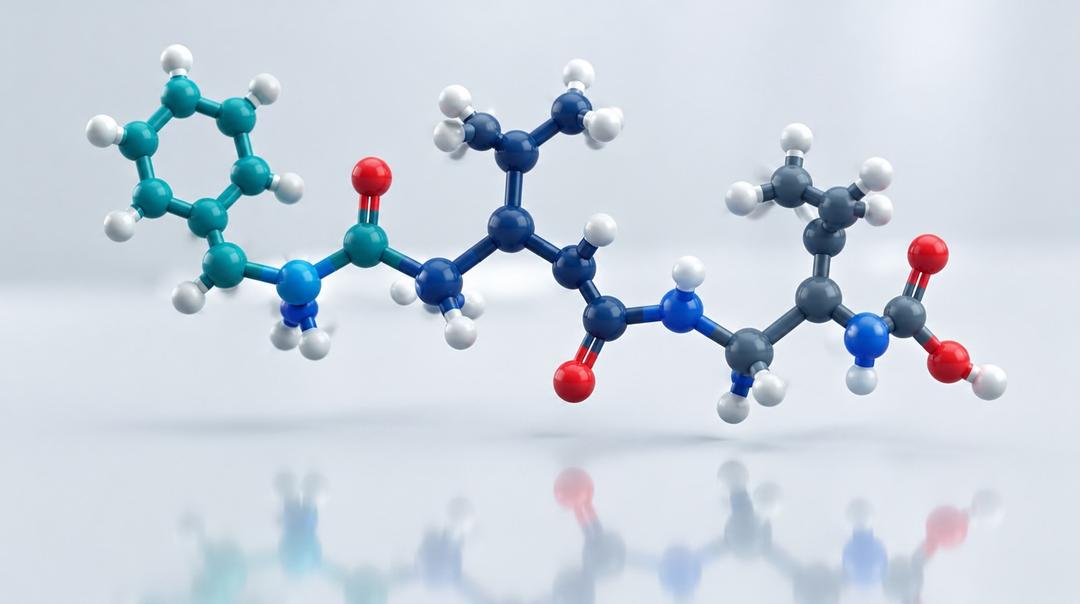
What is Pinealon made of?
Three ordinary amino acids: glutamic acid, aspartic acid and arginine, joined by two peptide bonds, with free ends. Two of the three side chains are acidic and one is strongly basic, so at neutral pH the molecule carries both charges at once. It is small enough that its molecular weight, about 418, is closer to many small-molecule drugs than to the peptides most catalogues sell.
| Property | Pinealon |
|---|---|
| Sequence | Glu-Asp-Arg (EDR) |
| Also called | EDR peptide; L-glutamyl-L-aspartyl-L-arginine |
| CAS number (PubChem) | 175175-23-2 |
| Molecular formula (PubChem) | C15H26N6O8 |
| Molecular weight (PubChem) | About 418 g/mol |
| Origin | Synthetic; proposed by the Khavinson group, St Petersburg |
| Evidence stage | Cell and rodent work; a few small human studies, published in Russian |
| Regulatory status | No Health Canada, FDA or EMA authorisation found |
The name suggests the pineal gland, and it is easy to assume Pinealon is an extract of it or a relative of melatonin. It is neither. It is a made-to-order tripeptide, and its name is a label from the series it belongs to rather than a description of where it comes from.
How is Pinealon thought to work?
The proposal behind the whole series is unusual for a peptide. Most signalling peptides act on a receptor at the cell surface. The Khavinson group instead proposes that very short peptides enter cells and bind DNA or histones directly, changing which genes are read.
Two lines of laboratory work are offered in support. Fedoreyeva and colleagues reported, from fluorescence measurements, that several short peptides including Glu-Asp-Arg bind wheat histones and their complexes with short DNA strands, and suggested this as an epigenetic mechanism (PMID 23581987). Silanteva and colleagues used spectroscopy, NMR, viscosity and molecular dynamics to study Glu-Asp-Arg with DNA in solution, and reported that it can partly enter the major groove of the double helix, with magnesium ions promoting the interaction (PMID 30762356).
That a small charged peptide interacts with DNA in a test tube is plausible chemistry. It is a long way from showing that the same peptide reaches the nucleus of a living cell in meaningful amounts and regulates a particular gene there. No receptor has been described, and the mechanism remains a proposal. How receptor and non-receptor mechanisms are established is covered in how peptide receptors work.
What has Pinealon been studied for?
| Area | Evidence stage | What exists |
|---|---|---|
| Gene and protein expression in neurons | Cell culture | Serotonin synthesis, apoptosis markers and antioxidant enzymes in cultured brain cells |
| Hypoxia in old rats | Animal | Caspase-3 in brain and cytokines in blood under acute hypoxia |
| Markers of biological age | Small human studies, published in Russian | Older adults and people with chronic illness, measured on biological-age indices |
| Alzheimer's disease | Review of the group's own work | Proposed links between EDR and pathways in Alzheimer's pathology |
Cell work. Khavinson and colleagues reported that Glu-Asp-Arg and a related tripeptide, Lys-Glu-Asp, increased serotonin expression in ageing cultures of rat brain cortex cells, and used molecular docking to propose a binding site in the gene for tryptophan hydroxylase, the enzyme that makes serotonin (PMID 24909721). A 2021 review by the same group gathers its cell and animal findings on apoptosis proteins such as caspase-3 and p53, the antioxidant enzymes SOD2 and GPX1, and dendritic spines in neuron cultures from mouse models of Alzheimer's and Huntington's diseases, and proposes the peptide as relevant to Alzheimer's pathology (PMID 33396470).
Animal work. Mendzheritskii and colleagues compared Pinealon with Cortexin, a brain-derived polypeptide preparation, in old rats exposed to acute hypoxia, measuring caspase-3 activity in the brain and interleukin-6 and tumour necrosis factor in blood (PMID 25051764). It is a single rat study, published in Russian.
Human studies. Meshchaninov and colleagues gave Pinealon and Vesugen, another tripeptide from the series, to 32 people aged 41 to 83 with chronic illness and an organic brain syndrome in remission, and reported changes in biological-age indicators (PMID 26390612). Myakotnykh and colleagues compared several approaches to "geroprotection" across 110 people, including the two peptides (PMID 28539017). Both are small, published in Russian, and not placebo-controlled trials of the kind that could separate a peptide from time, expectation or chance. How to weigh studies like these is set out in how to read a peptide study.
Where the evidence stops
One research group. Nearly every paper on Pinealon is by the group that proposed the bioregulator series or its close collaborators. Independent replication, the step that turns a finding into something others can build on, is largely missing. Why that matters is covered in conflicts of interest in research.
A mechanism that is still a proposal. DNA and histone binding is shown in solution and by docking, not as a demonstrated pathway inside living cells.
No registered trials. We found no randomised, placebo-controlled trial of Pinealon registered on ClinicalTrials.gov.
Is Pinealon approved anywhere?
Not that we could find. Pinealon has no authorisation from Health Canada, the FDA or the EMA, for any indication, and it is not a licensed natural health product in Canada. Status in Canada can be checked in the Drug Product Database, and the general framework is set out in peptides and Canadian law.
What is Pinealon commonly confused with?
Epithalon. Another member of the same series, the tetrapeptide Ala-Glu-Asp-Gly, and the one most associated with the pineal gland. The two are different molecules with separate literatures; see what Epitalon is.
Melatonin. A pineal hormone with cloned receptors and many randomised trials. It is not a peptide and is unrelated to Pinealon.
Cortexin. A polypeptide preparation extracted from animal brain, used as Pinealon's comparator in the hypoxia study. It is a mixture, not a defined molecule.
Supplied here for laboratory use: Pinealon. For laboratory research use only.
The findings above describe the compound in the cells, animals and people studied, not any laboratory reagent. Nothing here is medical, dosing, or therapeutic guidance.
Frequently asked questions
Is Pinealon a hormone? No. It is a synthetic tripeptide. The body does not make it as a hormone, and it is unrelated to melatonin despite its name.
Who developed Pinealon? It comes from the short-peptide bioregulator series proposed by Vladimir Khavinson and colleagues in St Petersburg, the same series as Epithalon, Vesugen and Cartalax.
Has Pinealon been tested in clinical trials? Only in small studies published in Russian, measuring markers of biological age in older adults. There is no registered, placebo-controlled trial.
Is Pinealon legal in Canada? It has no Canadian authorisation as a drug or as a natural health product. It is sold here as a laboratory research chemical, not for human use.
Selected Research References
- Khavinson V, Linkova N, Kozhevnikova E, Trofimova S. EDR Peptide: Possible Mechanism of Gene Expression and Protein Synthesis Regulation Involved in the Pathogenesis of Alzheimer's Disease. Molecules. 2020;26(1):159. pubmed.ncbi.nlm.nih.gov/33396470
- Khavinson VKh, Lin'kova NS, Tarnovskaya SI, et al. Short peptides stimulate serotonin expression in cells of brain cortex. Bulletin of Experimental Biology and Medicine. 2014;157(1):77-80. pubmed.ncbi.nlm.nih.gov/24909721
- Fedoreyeva LI, Smirnova TA, Kolomijtseva GY, Khavinson VKh, Vanyushin BF. Interaction of short peptides with FITC-labeled wheat histones and their complexes with deoxyribooligonucleotides. Biochemistry (Moscow). 2013;78(2):166-175. pubmed.ncbi.nlm.nih.gov/23581987
- Silanteva IA, Komolkin AV, Morozova EA, Vorontsov-Velyaminov PN, Kasyanenko NA. Role of Mono- and Divalent Ions in Peptide Glu-Asp-Arg-DNA Interaction. Journal of Physical Chemistry B. 2019;123(9):1896-1902. pubmed.ncbi.nlm.nih.gov/30762356
- Mendzheritskiĭ AM, Karantysh GV, Ryzhak GA, Dem'ianenko SV. Regulation of content of cytokines in blood serum and of caspase-3 activity in brains of old rats in model of sharp hypoxic hypoxia with Cortexin and Pinealon. Advances in Gerontology. 2014;27(1):94-97. pubmed.ncbi.nlm.nih.gov/25051764
- Meshchaninov VN, Tkachenko EL, Zharkov SV, Gavrilov IV, Katyreva IuE. Effect of synthetic peptides on aging of patients with chronic polymorbidity and organic brain syndrome of the central nervous system in remission. Advances in Gerontology. 2015;28(1):62-67. pubmed.ncbi.nlm.nih.gov/26390612
- Myakotnykh VS, Torgashov MN, Egorin KV, et al. Comparative analysis of different methods of geroprotective. Advances in Gerontology. 2016;29(4):594-601. pubmed.ncbi.nlm.nih.gov/28539017
All products sold by NovaEvum are for research and laboratory use only. They are not intended for human or animal consumption, diagnosis, treatment, cure, or prevention of any disease.