
Testing, quality and handling
Buying research peptides in Canada: how to tell a checkable supplier from a convincing one
AR
· 5 min read
A summary of published research, with citations. It states no amount, schedule or route, and makes no claim about what this compound does in a person. Supplied for laboratory research use only.
On this page · 6 sections
Most research peptide websites look alike. They have clean product photos, a purity figure on every page, and a promise of third-party testing. The difference between a supplier you can rely on and one you cannot is rarely in how the site looks. It is in whether the claims on it can be checked.
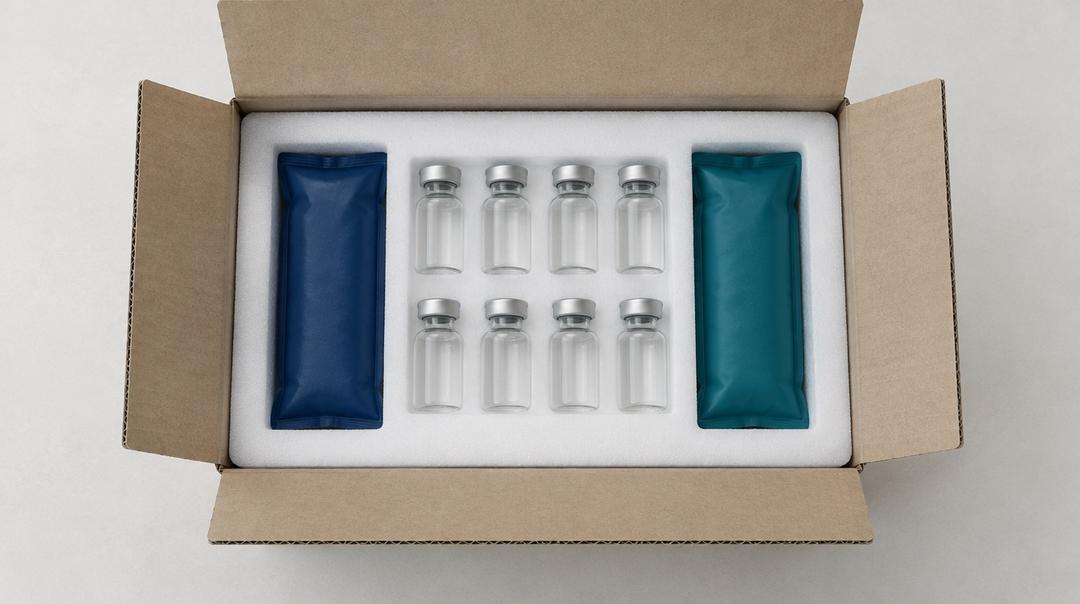
This page is a practical checklist for researchers in Canada. It applies to any supplier, this Canadian research peptide shop included.
Start with the certificate, not the purity figure
A purity percentage on a product page is a claim. A certificate of analysis is the evidence behind it, and it is only evidence if you can open it and check it. Before ordering, look for four things:
A named laboratory. The certificate should come from an identifiable analytical laboratory, not from the seller. A document with no laboratory name, or with the seller's own letterhead, is a statement by the seller about its own goods.
A way to verify it at the source. Some laboratories issue a unique key or a verification page for each report, so the document can be checked on the laboratory's own site rather than taken from the seller's copy. Where that exists, use it.
A lot or batch number. A certificate covers the sample that was tested, not every vial ever sold. The lot on the certificate should match the lot on the vial you receive. If a supplier shows one certificate for every batch it has ever sold, it is showing you one test.
What was actually measured. Purity by HPLC tells you what share of the sample is the stated peptide. Fill, or net content, tells you how many milligrams the vial actually holds. Endotoxin testing is a separate assay again. A certificate that reports only purity has not told you the vial contains what the label says. How to read a certificate of analysis goes through each section, and HPLC vs LC-MS explains what each method can and cannot see.
Check that the numbers agree with each other
A trustworthy page is consistent with itself. The purity on the product page should not be higher than the certificate behind it. The vial size on the certificate should be a size the supplier sells. The storage temperature on the spec table should match the label in the photograph. Small contradictions like these are the easiest sign that figures were typed in rather than taken from documents.
Prefer domestic shipping
Ordering from a Canadian supplier that ships domestically has practical advantages for a researcher in Canada:
- No border crossing. International parcels go through customs inspection and can be delayed or held. A parcel shipped within Canada does not cross a border at all.
- Shorter transit. Lyophilised peptides tolerate ambient temperature in transit, but a parcel that spends a day or two in the post is better than one that spends two weeks crossing borders.
- Canadian dollars and Canadian payment methods. No currency conversion and no international card fees, and options such as Interac e-Transfer.
- A business you can reach. A Canadian phone number, a Canadian address and a returns policy written for Canadian buyers make problems easier to resolve.
Red flags
Any one of these is a reason to look elsewhere:
- Dosing or usage instructions. A supplier of laboratory research chemicals that tells you how much to take, how often, or by what route is not selling research chemicals. It is selling unapproved drugs, whatever the disclaimer at the bottom says.
- Health claims. "Heals injuries", "burns fat", "reverses ageing". Statements about what a product does in a person are drug claims, and no research peptide sold this way is an approved drug.
- No certificates, or certificates you cannot open. "Third-party tested" with no document to look at is a sentence, not evidence.
- The same certificate everywhere. One report reused across every product, size or year.
- "Pharmaceutical grade." That phrase describes a manufacturing standard, made under good manufacturing practice to a pharmacopoeial monograph. A supplier that uses it should be able to show you that, and research suppliers almost never can.
- Prices far below everyone else's. Synthesis, purification and independent testing all cost money. A price that ignores those costs usually means one of them was skipped.
The legal context
Research peptides are sold in Canada as laboratory chemicals, not as drugs. Most are not approved by Health Canada for any use in people, and some share a molecule with an approved prescription medicine without being that medicine. What Health Canada's rules mean for research peptides sets out how that works. The short version is that a legitimate research supplier sells for laboratory use only and says so plainly, and that the buyer is responsible for using the material lawfully.
How NovaEvum handles each of these
The same checklist, applied here:
- Certificates. Every certificate we hold is published on the testing page as the laboratory's own file, and each product page links the certificates for that compound. Each one names the laboratory that issued it.
- Agreement. The purity on each product page is kept below every certificate published for that compound, and a test fails our build if it is not.
- Shipping. Orders ship from Toronto to addresses in Canada only, tracked, with free express shipping. See shipping.
- No usage content. No page on this site states an amount, schedule or route for use in a person.
The full catalogue, with the certificates for each compound, is in the shop.
For laboratory research use only.
All products sold by NovaEvum are for research and laboratory use only. They are not intended for human or animal consumption, diagnosis, treatment, cure, or prevention of any disease.