
Alexander Reid
Biotechnology & Research Methods Editor
Biotechnology, Research Methodology & Scientific Quality
NovaEvum Research Editorial
Education
- Biomedical Engineering, University of Waterloo
- Chemical Engineering, Massachusetts Institute of Technology
Alexander Reid covers biotechnology, research methodology and scientific quality standards for NovaEvum Research Editorial.
This specialization examines experimental design, laboratory documentation, research reproducibility, analytical methods and Canadian regulatory developments.
Articles explain how scientific methods influence the interpretation, reliability and reproducibility of research findings. Articles evaluate relevant research and methodological frameworks from institutions, including the Massachusetts Institute of Technology, McMaster University and other academic research organizations.
Topics covered
- Experimental design
- Canadian peptide regulations
- Research methodology
- Laboratory standards
- Biotechnology
Research categories
University references in NovaEvum Research Editorial describe institutions whose published scientific literature may be examined in our editorial coverage. These references do not imply that NovaEvum or its authors are affiliated with, endorsed by, or collaborating with those institutions.
27 articles under this name
 IllustrationGeneral5 min readThe Future of Oral Peptides: Could Injections Become Less Common?Why peptides are hard to take by mouth, and what 2026 research says about permeation enhancers, molecular engineering, oral semaglutide…Read article
 IllustrationTesting, quality and handling10 min readBacteriostatic Water and the 28-Day Rule: What It Actually CoversWhere the 28-day multi-dose vial convention comes from, what benzyl alcohol does and does not do, and why the rule says nothing about a…Read article
 IllustrationReading the evidence9 min readCase Report Evidence: What Case Reports and Safety Signals Can ShowCase reports, FAERS and Canada Vigilance raise safety questions but cannot measure risk. How disproportionality analysis works, and where…Read article
 IllustrationReading the evidence11 min readPhase 1, 2 and 3 Trials Explained: What Each Clinical Trial Phase AnswersWhat phase 1, 2, 3 and 4 trials are each designed to answer, how large they are, how accelerated approval works, and why most compounds…Read article
 IllustrationTesting, quality and handling9 min readCompounded Peptides in Canada: How Compounding Differs From Research PeptidesHow pharmacy compounding of peptides works in Canada, what Health Canada's POL-0051 says, and how a compounded preparation differs from a…Read article
 IllustrationReading the evidence10 min readConflicts of Interest in Research: How Funding and Allegiance Shape ResultsIndustry-funded studies more often report favourable results. How sponsorship bias works, why single-lab literatures matter, and where…Read article
 IllustrationReading the evidence10 min readCorrelation vs Causation: How to Read an Observational StudyWhy an association is not proof of cause: confounding, reverse causation, healthy-user bias and Mendelian randomisation, with real…Read article
 IllustrationFoundations9 min readHealth Canada's Unauthorized Semaglutide and GLP-1 Warnings, ExplainedWhat Health Canada's advisories on fake and unauthorized semaglutide and tirzepatide say, how to check a DIN, and how recalls differ from…Read article
 IllustrationReading the evidence11 min readHow to Read a PubMed Abstract: What It Says and What It Leaves OutA field-by-field guide to a PubMed record: abstract structure, species and sample size, conflicts of interest, retractions, filters and…Read article
 IllustrationReading the evidence10 min readHow to Read a ClinicalTrials.gov Record: A Field-by-Field GuideHow to read a ClinicalTrials.gov record: status, phase, outcomes, estimated vs actual enrolment, posted vs published results, sponsor and…Read article
 IllustrationReading the evidence9 min readIn Vitro vs In Vivo: What Cell and Animal Studies Can ShowIn vitro work shows what a molecule can do to cells in a dish; in vivo work shows what happens in a living body.Read article
 IllustrationReading the evidence10 min readOpen-Label vs Placebo-Controlled Trials: Why Blinding Changes the ResultWhat open-label and placebo-controlled mean, how placebo and nocebo effects work, and why open-label extensions report bigger effects.Read article
 IllustrationReading the evidence10 min readP Value vs Confidence Interval: What Each One Tells YouA p value measures how surprising data would be if nothing were happening. A confidence interval shows which effect sizes the data allow.Read article
 IllustrationTesting, quality and handling10 min readDo Peptides Need to Be Refrigerated During Shipping? What Stability Data ShowsLyophilised peptides usually tolerate short ambient transit; solutions often do not. What stability studies show, and what a receiving lab…Read article
 IllustrationFoundations10 min readAre Peptides Banned in Sport? The WADA Prohibited List ExplainedMany peptides are banned in sport under WADA's S0 and S2 categories. What the list covers, where BPC-157, TB-500 and ipamorelin fall, and…Read article
 IllustrationReading the evidence10 min readPublication Bias Explained: The Studies You Never Get to SeePositive results are published more often and faster than null ones. Funnel plots, trial registration, and unpublished trials of compounds…Read article
 IllustrationReading the evidence10 min readRelative Risk vs Absolute Risk: How to Read the Numbers in a TrialRelative risk, absolute risk reduction, number needed to treat, hazard ratios and confidence intervals, worked through with real trial…Read article
 IllustrationTesting, quality and handling9 min readResearch Use Only (RUO) Meaning: What the Label Says and What It Doesn'tWhat a research use only label means, how it differs from IVD and drug authorisation, why it is not a quality grade, and how labs document…Read article
 IllustrationReading the evidence10 min readSurrogate Endpoints Explained: When a Marker Stands In for an OutcomeWhat a surrogate endpoint is, how one is validated, why CAST, torcetrapib and ACCORD failed, and how to read BDNF, telomere and lean-mass…Read article
 IllustrationReading the evidence10 min readSystematic Review vs Meta-Analysis: What Each Is and How to Judge OneA systematic review is a method for finding and appraising every study; a meta-analysis pools their numbers. How PRISMA, heterogeneity and…Read article
 IllustrationTesting, quality and handling2 min readAcetic Acid vs Bacteriostatic Water: Solubility Is Not SterilityAcetic acid and bacteriostatic water compared for laboratory peptide work: pH, solubility, stability and evidence limits.Read article
 IllustrationTesting, quality and handling2 min readBacteriostatic Water vs Sterile Water: What Is the Laboratory Difference?Bacteriostatic versus sterile water explained: preservatives, container labels, compatibility, sterility and common laboratory…Read article
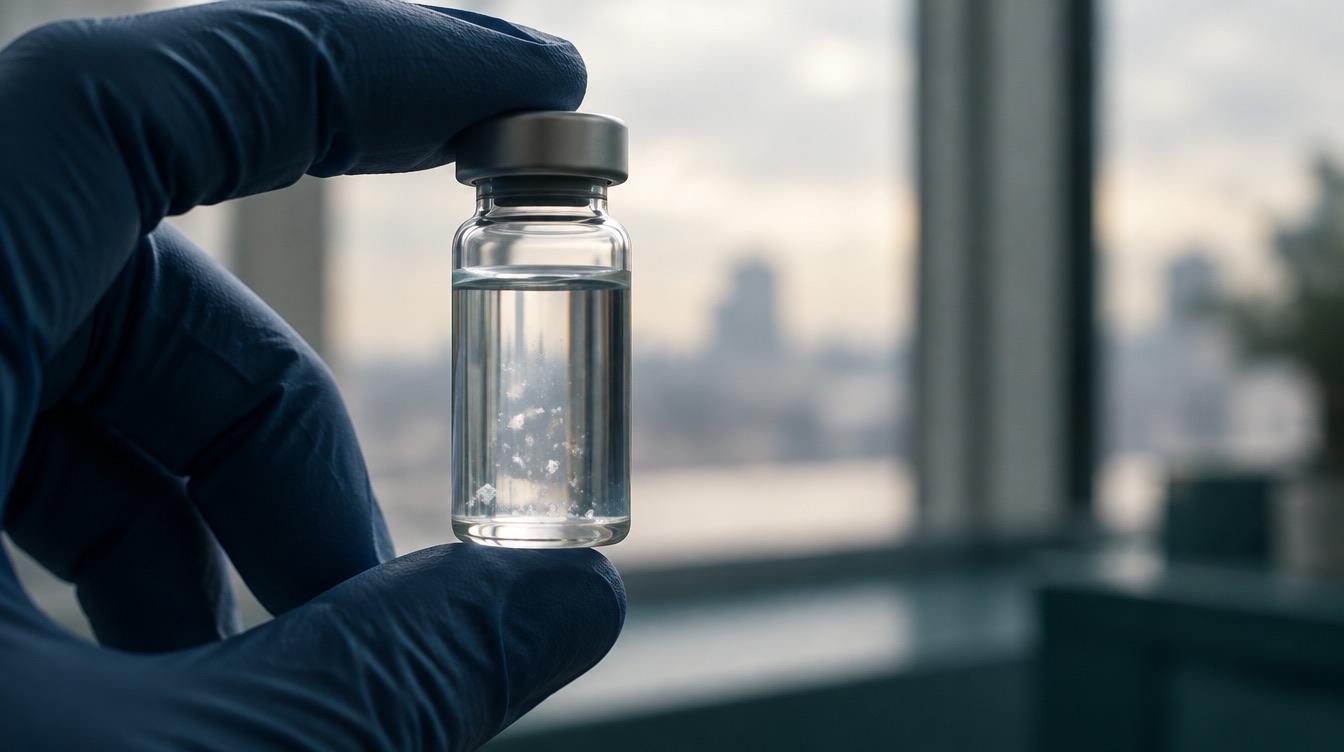 IllustrationTesting, quality and handling2 min readResearch Peptide Reconstitution Problems: Cloudiness, Residue and Assay ErrorsResearch peptide troubleshooting guide: residue, cloudiness, pH, adsorption and why laboratory appearance cannot establish purity.Read article
 IllustrationTesting, quality and handling5 min readBuying research peptides in Canada: how to tell a checkable supplier from a convincing oneWhat to check before ordering research peptides in Canada: verifiable certificates, matching lots, domestic shipping, and the red flags to…Read article
 IllustrationReading the evidence8 min readHow to read a peptide study: design, controls and the limits of a resultThe evidence hierarchy, the controls that make a result mean something, why small studies mislead, and how often animal findings fail to…Read article
 IllustrationFoundations7 min readPeptides and Canadian law: how Health Canada regulates drugs, and where research-use material sitsWhat market authorisation means, why a research chemical is not a medicine, and which questions only a lawyer or the regulator can answer.Read article
 IllustrationTesting, quality and handling7 min readHandling research peptides in the laboratory: from receipt to aliquotWhat happens to a peptide after the certificate was written is your record, not the supplier's. Receipt, dissolution, aliquoting…Read article