
Testing, quality and handling
Bacteriostatic Water vs Sterile Water: What Is the Laboratory Difference?
AR
· 2 min read
A summary of published research, with citations. It states no amount, schedule or route, and makes no claim about what this compound does in a person. Supplied for laboratory research use only.
On this page · 6 sections
Quick answer: Both can be sterile at manufacture. Bacteriostatic water contains a preservative, commonly benzyl alcohol; sterile water for injection generally does not. Neither guarantees compatibility or stability with a particular peptide.
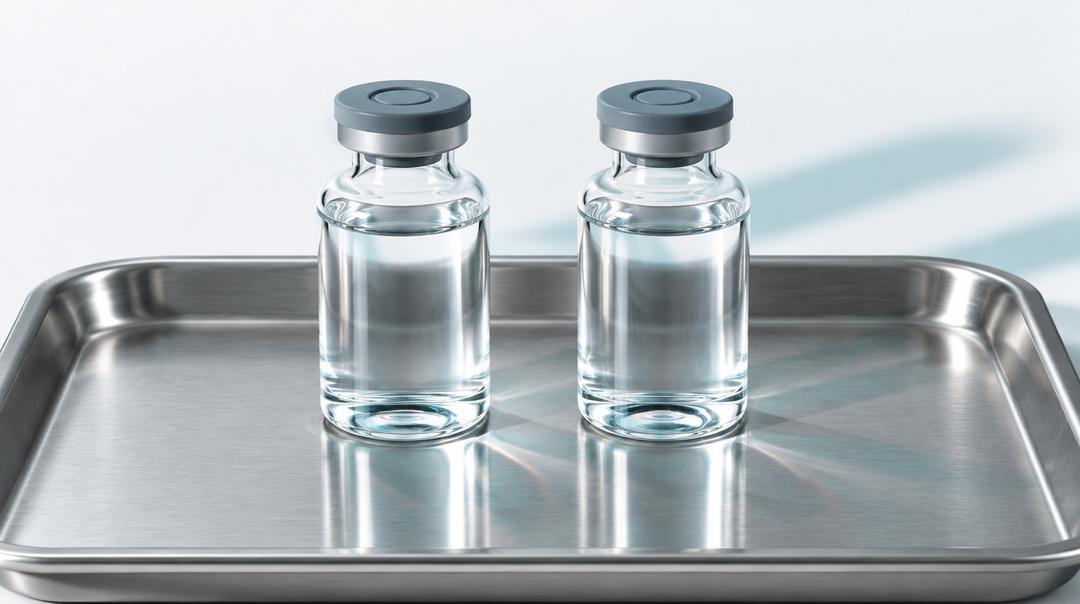
The difference is in the formulation
A bacteriostatic-water label describes a preservative-containing product designed for specified pharmaceutical dilutions. A sterile-water label describes water manufactured to a defined quality standard without that preservative. These terms are not interchangeable with “safe for any molecule,” and a sterile label does not supply missing product-specific formulation evidence.
Why benzyl alcohol matters
Common labelled bacteriostatic water for injection contains 0.9% benzyl alcohol, although product labels can differ. Benzyl alcohol can interact with formulation components or affect assay results. It also carries important patient-population restrictions on approved pharmaceutical labels. Reading the exact container label is more useful than repeating internet rules about a universal diluent.
Compatibility is a separate scientific question
The solubility and stability of a peptide depend on its sequence, counterion, concentration, pH, buffer, light exposure and container material. A clear solution can still contain chemically degraded peptide. Conversely, temporary haze may reflect physical phenomena needing investigation rather than a conclusion about identity. Published compatibility data must match the actual formulation under study.
The 28-day misconception
A multi-dose container rule, where applicable, is a contamination-control limit for a specific product and setting, not proof that every dissolved research peptide remains chemically stable for 28 days. Chemical stability, microbial control and suitability for administration are separate claims requiring separate evidence. The convention itself is examined in bacteriostatic water and the 28-day rule.
Frequently asked questions
Does bacteriostatic mean indefinitely sterile? No. Preservatives do not cancel the need for validated storage and handling.
Can the two waters be substituted? Only where product-specific instructions and compatibility evidence permit the substitution.
Supplied here for laboratory use: Bacteriostatic water. The laboratory's certificate for each lot is linked from its product page. For laboratory research use only.
Further reading
- Research Peptide Lab Handling: Receipt to Aliquot
- Lyophilized Peptides: Stability and Storage Explained
All products sold by NovaEvum are for research and laboratory use only. They are not intended for human or animal consumption, diagnosis, treatment, cure, or prevention of any disease.