
Testing, quality and handling
Research Peptide Reconstitution Problems: Cloudiness, Residue and Assay Errors
AR
· 2 min read
A summary of published research, with citations. It states no amount, schedule or route, and makes no claim about what this compound does in a person. Supplied for laboratory research use only.
On this page · 6 sections
Quick answer: Unexpected residue, cloudiness or inconsistent assay results are observations requiring documented investigation. They cannot be diagnosed with a photograph, and the answer is not automatically to add more solvent.
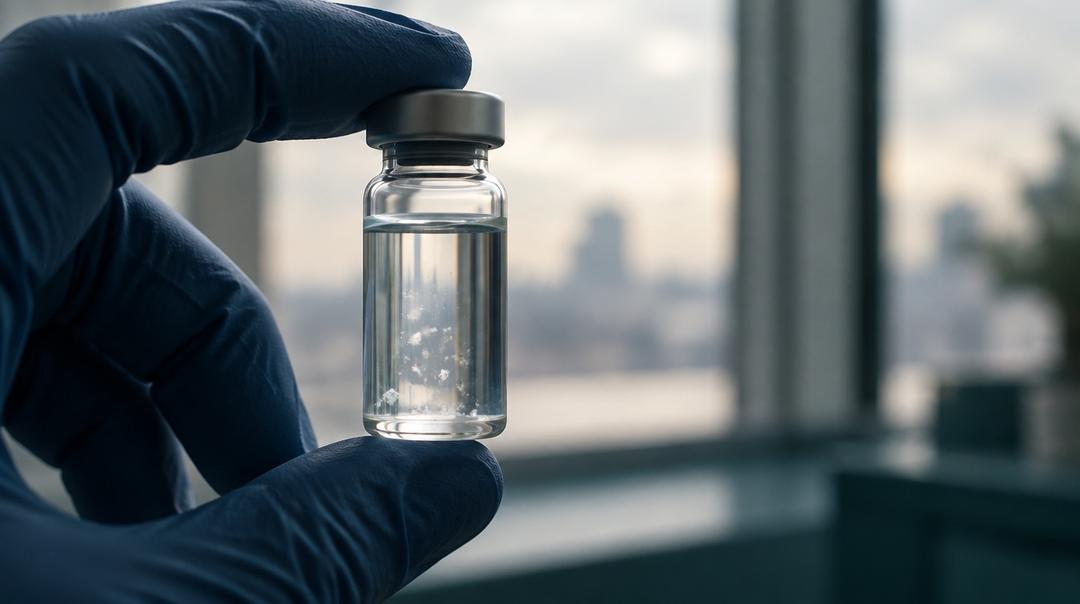
Start by defining the observation
A film on a vial wall, visible particles, a diffuse haze and an unexpectedly low measured concentration are different findings. Record the lot, stated chemical form, receipt condition and analytical method before interpreting them.
Consider competing explanations
Apparent residue can reflect incomplete dissolution, adsorption, excipient material or precipitated peptide. Haze can reflect particles or phase separation. A low assay may arise from degradation, matrix effects or calibration problems. None of these observations alone identifies a cause.
Use orthogonal methods
Chromatographic separation helps characterize components; mass spectrometry can support molecular identification; particle and size methods assess different physical phenomena. Use reference standards and controls so the method does not confuse container or solvent artifacts with the peptide.
Document limits and decisions
A quality-control workflow records deviations, quarantine decisions and results, rather than issuing a universal “fix.” Research materials with unresolved identity or physical stability questions should not be treated as safe for administration. Storage and chemical shelf-life require product-specific evidence.
Frequently asked questions
Are visible particles normal? Appearance alone cannot establish whether particles are harmless or acceptable.
Can a COA diagnose a later mixing problem? No. It describes the sample and tests at the time of analysis.
Further reading
- Lyophilized Peptides: Stability and Storage Explained
- Peptide Certificate of Analysis: How to Read a COA
All products sold by NovaEvum are for research and laboratory use only. They are not intended for human or animal consumption, diagnosis, treatment, cure, or prevention of any disease.