
Foundations
Are Peptides Banned in Sport? The WADA Prohibited List Explained
AR
· 10 min read
A summary of published research, with citations. It states no amount, schedule or route, and makes no claim about what this compound does in a person. Supplied for laboratory research use only.
On this page · 9 sections
- How the Prohibited List is organised
- What does S0 "non-approved substances" mean?
- Is BPC-157 banned in sport?
- Is TB-500 banned?
- Are ipamorelin and other GH secretagogues banned?
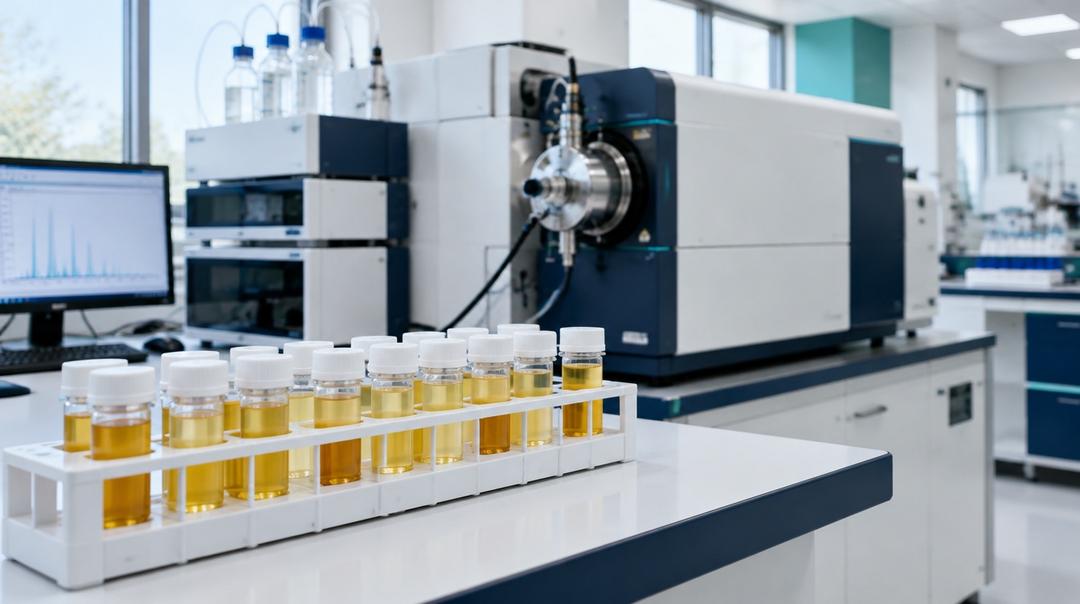
- How do anti-doping laboratories detect peptides?
- Does the ban mean these peptides enhance performance?
- The Canadian position
- Frequently asked questions
Many are. The World Anti-Doping Agency's Prohibited List bans "peptide hormones, growth factors, related substances and mimetics" at all times under section S2. That covers growth-hormone secretagogues such as ipamorelin and growth factors such as thymosin β4 and TB-500. Section S0 separately bans any substance with no current approval for human therapeutic use, which catches unapproved research peptides such as BPC-157. In Canada the list is applied by the Canadian Centre for Ethics in Sport. "Not named on the list" does not mean permitted.
How the Prohibited List is organised
The list is published by the World Anti-Doping Agency (WADA). It is revised every year, and each edition takes effect on 1 January. It sorts prohibited substances and methods into numbered sections. Some are banned at all times, in and out of competition, and others only in competition. Thevis and colleagues' annual reviews of anti-doping analytical science are written against each year's edition. The 18th, covering 2024–2025, is framed around the 2025 list (PMID 41702393).
Two sections do almost all the work for peptides:
| Section | What it covers | When prohibited | Peptides relevant to this catalogue |
|---|---|---|---|
| S0: Non-approved substances | Any pharmacological substance not addressed elsewhere on the list and with no current approval by any government health authority for human therapeutic use | At all times | BPC-157, and in principle any unapproved research peptide not covered by a more specific section |
| S2: Peptide hormones, growth factors, related substances and mimetics | Erythropoiesis agents; peptide hormones and their releasing factors, including growth hormone, GH-releasing hormone and its analogues, and GH secretagogues; growth factors and their modulators | At all times | Ipamorelin (GH secretagogue); CJC-1295 and tesamorelin (GHRH analogues); TB-500 and thymosin β4 (growth-factor modulators) |
S2's status as a section banned in and out of competition is stated in the endocrinology literature reviewing it (PMID 36736729). S0 is used in practice to bring in substances that arrive before any regulator has looked at them. For example, troponin activators have been classified there since 2024 (PMID 42229182).
What does S0 "non-approved substances" mean?
S0 is a catch-all, and it is the section most people searching about research peptides have never heard of. Roughly, it prohibits any pharmacologically active substance that no other section of the list addresses and that has no current approval by any governmental health authority for human therapeutic use. That includes drugs still in preclinical or clinical development, discontinued drugs, designer drugs and substances approved only for veterinary use.
Two consequences follow. First, a compound does not need to be named to be banned. The list's named examples illustrate a section and do not exhaust it. Second, S0 status depends on regulators, not on WADA's opinion of the compound. If a substance gains approval somewhere for human therapeutic use, it falls out of S0, though another section may still catch it. Thevis's 2014 review of detection methods for emerging and non-approved drugs shows how wide this category is in practice. It runs from modified growth factors and TB-500 to small molecules that never finished development (PMID 24906629).
Is BPC-157 banned in sport?
BPC-157 is not approved as a medicine by any regulator, and that is the condition S0 describes. Anti-doping laboratories treat it as a doping target. Cox and colleagues identified it in confiscated vials. They found it forms a stable metabolite in plasma, validated a urine method with a detection limit of 0.1 ng/mL, and found the peptide stable in urine for at least four days (PMID 28035768). A 2023 study used isotope-labelled BPC-157 to map nine metabolites and validated a method for the parent peptide and five main metabolites in human urine (PMID 37959764).
Whether a given year's list prints BPC-157 by name as an example matters less than it appears. The S0 wording covers it as long as it lacks approval. The rodent literature behind its reputation is covered in BPC-157 and connective tissue.
Is TB-500 banned?
Yes. Thymosin β4 and products sold as TB-500 fall under S2's growth-factor provisions. Recent detection papers describe Tβ4 as listed by WADA (PMID 39314109). TB-500 is not a single defined molecule in the market. Esposito and colleagues analysed a product sold under that name and identified an N-terminally acetylated fragment of thymosin β4, residues 17–23 (Ac-LKKTETQ). They then synthesised it and proposed a detection strategy for plasma and urine (PMID 22962027). A 2023 analysis of TB500, TB1000 and a related product found the contents did not consistently match earlier descriptions (PMID 36482504). The relationship between TB-500 and the full-length protein is covered in TB-500 vs thymosin beta-4.
Thymosin β4 also shows why endogenous peptides are hard to police. The body makes it in abundance. Equine work found that plasma Tβ4 rises quickly in stored samples that have not been separated from blood cells, because the cells break down and release it. The same work showed that a synthesis impurity, which does not occur naturally, can mark an administered product (PMID 39314109).
Are ipamorelin and other GH secretagogues banned?
Yes. Growth-hormone-releasing peptides stimulate the body's own growth-hormone secretion and are named in S2. Detection research targets them specifically for that reason. As Thomas and colleagues put it, the established test for exogenous growth hormone cannot see a rise in the body's own hormone. Their method detects GHRP-1, -2, -4, -5 and -6, alexamorelin, ipamorelin and hexarelin in urine, with detection limits of 0.2–1 ng/mL. In an excretion study the main GHRP-2 metabolite stayed detectable for over 20 hours, while the intact peptide was not seen (PMID 21298258). Semenistaya and colleagues mapped metabolites of five GHRPs, including ipamorelin, for the same purpose (PMID 25869809). The pharmacology of these compounds is compared in CJC-1295 vs ipamorelin.
How do anti-doping laboratories detect peptides?
Peptides are hard targets. They circulate at very low concentrations, many are cleared within hours, and some are identical to molecules the body makes. The literature shows four broad strategies.
Direct detection of the peptide or its metabolites. Liquid chromatography with tandem or high-resolution mass spectrometry is the workhorse. Metabolism studies matter because the intact peptide may be gone before the metabolite is, as the GHRP-2 work shows.
Markers that do not occur naturally. Synthetic peptides often carry features or impurities that the endogenous molecule lacks, such as an acetylated fragment or a synthesis by-product. These separate administered material from the body's own.
Biomarkers of the hormone's action. For growth hormone, two approaches were developed. One compares the isoforms the pituitary makes with the single 22-kDa isoform of recombinant hormone, and it was introduced at the Athens Olympic Games. The other, from the GH-2000 project, measures IGF-I and type III procollagen, which rise in response to the hormone (PMID 20355225). WADA accepted that biomarker test in 2012. Cowan describes it as an early forensic use of biomarkers, and notes that its promised long detection window has not been fully realised in practice (PMID 34418311).
Retrospective analysis. High-resolution full-scan data can be re-examined later for metabolites unknown at the time of testing. Thomas and colleagues designed their GHRP method with this in mind.
Anti-doping rules apply strict liability: an athlete is responsible for any prohibited substance found in their sample, however it got there (PMID 34418311). This matters because research peptides and supplements are often mislabelled. GHRP-2 has been found in a product marketed as a nutritional supplement (PMID 20878896), and the TB-500 analyses above found inconsistent contents.
Does the ban mean these peptides enhance performance?
Not necessarily. Substances can be listed for health risk or for violating the spirit of sport, not only for proven performance effects. A 2019 review of the list's 23 substance classes found convincing evidence of performance enhancement for only five: anabolic agents, β2-agonists, stimulants, glucocorticoids and β-blockers. Growth hormone showed similar evidence only in untrained subjects. For 11 classes there were no well-designed studies at all (PMID 30411235). A ban is a regulatory decision, not a finding that a compound works.
The Canadian position
In Canada the Canadian Centre for Ethics in Sport administers the Canadian Anti-Doping Program, which adopts WADA's Prohibited List. Athletes subject to that programme are covered by the same S0 and S2 rules described here. Separately from sport, research peptides that are not authorized drugs are not approved for human use in Canada at all. That framework is set out in peptides and Canadian law. This page describes what the list covers and how detection research works. Nothing here is medical, dosing, or therapeutic guidance.
Supplied here for laboratory use: BPC-157, TB-500 and Ipamorelin. The laboratory's certificate for each lot is linked from its product page. For laboratory research use only.
Frequently asked questions
If a peptide is not named on the WADA list, is it allowed? Not necessarily. The S0 section prohibits any pharmacologically active substance with no current human therapeutic approval anywhere, whether or not it is named. Several sections also cover substances with a similar chemical structure or biological effect to those listed. The named examples illustrate the sections and are not complete lists.
What is the difference between S0 and S2? S2 covers defined pharmacological classes, such as peptide hormones, their releasing factors, growth hormone secretagogues and growth factors, whether or not the drugs are approved. S0 is a catch-all for substances no other section covers that have no human therapeutic approval anywhere. A compound can move out of S0 if it is approved, but S2 does not depend on approval.
Can a peptide be detected after it has been cleared from the blood? Sometimes. Many peptides break down quickly, so laboratories target stable metabolites that may outlast the parent molecule. They also look for markers of the hormone's downstream action, such as IGF-I. High-resolution data can also be re-analysed later. Detection windows vary widely by compound and are not something this page addresses further.
Who enforces the Prohibited List in Canada? The Canadian Centre for Ethics in Sport, which runs the Canadian Anti-Doping Program and applies WADA's list. Sport organisations that have adopted the program are bound by it. Under strict liability, an athlete is responsible for any prohibited substance found in their sample, including one from a contaminated or mislabelled product.
Are research peptides sold here permitted for athletes? This site sells laboratory chemicals for research use only, not products for human use. Several of them, including BPC-157, TB-500, ipamorelin, CJC-1295 and tesamorelin, fall within the S0 or S2 sections described above. Athletes should check the current list and their anti-doping organisation.
Selected Research References
- Thevis M, Schänzer W. Analytical approaches for the detection of emerging therapeutics and non-approved drugs in human doping controls. J Pharm Biomed Anal. 2014;101:66-83. pubmed.ncbi.nlm.nih.gov/24906629
- Cox HD, Miller GD, Eichner D. Detection and in vitro metabolism of the confiscated peptides BPC 157 and MGF R23H. Drug Test Anal. 2017;9(10):1490-1498. pubmed.ncbi.nlm.nih.gov/28035768
- Esposito S, Deventer K, Goeman J, Van der Eycken J, Van Eenoo P. Synthesis and characterization of the N-terminal acetylated 17-23 fragment of thymosin beta 4 identified in TB-500, a product suspected to possess doping potential. Drug Test Anal. 2012;4(9):733-738. pubmed.ncbi.nlm.nih.gov/22962027
- Thomas A, Höppner S, Geyer H, et al. Determination of growth hormone releasing peptides (GHRP) and their major metabolites in human urine for doping controls by means of liquid chromatography mass spectrometry. Anal Bioanal Chem. 2011;401(2):507-516. pubmed.ncbi.nlm.nih.gov/21298258
- Delcourt V, Garcia P, Chabot B, et al. Equine doping controls of thymosin β4: a population study and strategy for misuse detection. Drug Test Anal. 2025;17(7):1071-1077. pubmed.ncbi.nlm.nih.gov/39314109
- Holt RI. Detecting growth hormone abuse in athletes. Drug Test Anal. 2009;1(9-10):426-433. pubmed.ncbi.nlm.nih.gov/20355225
- Cowan DA, Moncrieffe DA. Procollagen type III amino-terminal propeptide and insulin-like growth factor I as biomarkers of growth hormone administration. Drug Test Anal. 2022;14(5):808-819. pubmed.ncbi.nlm.nih.gov/34418311
- Heuberger JAAC, Cohen AF. Review of WADA prohibited substances: limited evidence for performance-enhancing effects. Sports Med. 2019;49(4):525-539. pubmed.ncbi.nlm.nih.gov/30411235
All products sold by NovaEvum are for research and laboratory use only. They are not intended for human or animal consumption, diagnosis, treatment, cure, or prevention of any disease.