
BPC-157
BPC-157 and TB-500: Exploring the Latest Tissue Repair Research in 2026
SB
· 8 min read
A summary of published research, with citations. It states no amount, schedule or route, and makes no claim about what this compound does in a person. Supplied for laboratory research use only.
On this page · 13 sections
- Understanding the biology of tissue repair
- What is BPC-157?
- BPC-157 and cellular signalling
- Tendon and ligament research models
- Understanding thymosin beta-4
- Is TB-500 the same as thymosin beta-4?
- What did the October 2026 review find?
- What makes regenerative peptide research scientifically interesting?
- Comparing the research areas
- The NovaEvum perspective
- The future of BPC-157 and TB-500 research
- Frequently asked questions
- Further reading
Tissue repair is one of the most complex processes in biology. When tissue is injured, the response involves coordinated interactions among cells, structural proteins, signalling molecules, blood vessels and the immune system, and researchers studying it are particularly interested in how molecular signals influence cell migration, extracellular matrix organization, the growth of new blood vessels and inflammation. Among the experimental compounds frequently examined in this field are BPC-157 and molecules related to thymosin beta-4, including products marketed as TB-500. A review published on October 27, 2026 in the Journal of the American Academy of Orthopaedic Surgeons gives a timely assessment of their evidence, and an opportunity to look at what makes these peptides interesting and which questions remain open.
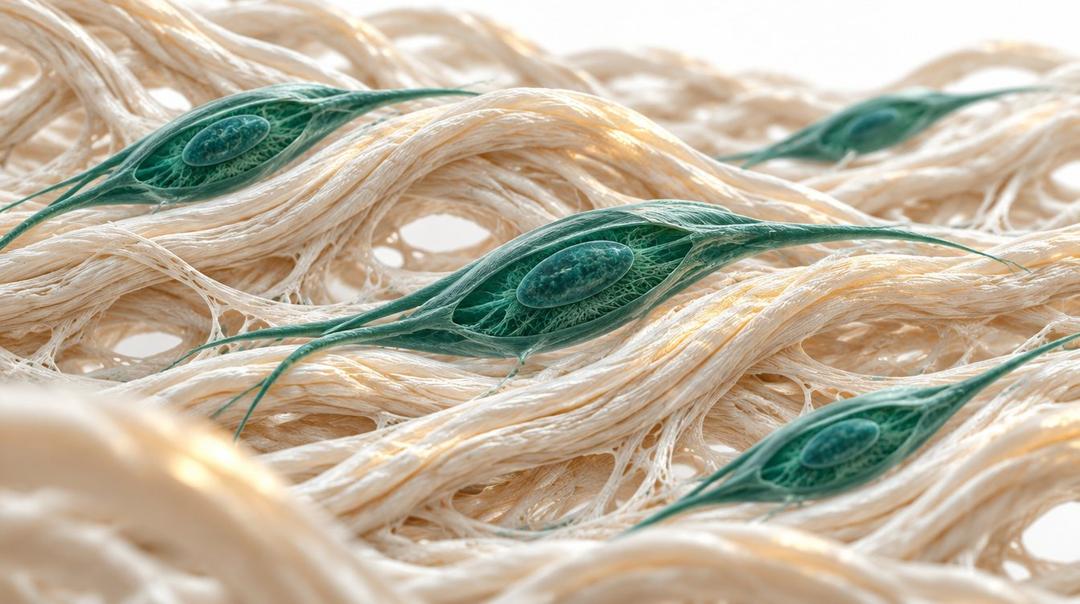
Understanding the biology of tissue repair
Biological repair runs through several overlapping phases. Initially, injured tissue triggers signalling associated with blood clotting and inflammation, and cells involved in immune surveillance and tissue maintenance respond to the damaged environment. Fibroblasts and other cell populations then produce extracellular matrix and begin to organize new tissue. Collagen fibres provide structural support, while vascular networks deliver oxygen and nutrients. Over time the tissue remodels as its structure adapts to mechanical and functional demands.
Researchers studying tissue-related peptides examine whether particular molecular interactions influence parts of this process. Observing a biological response in an experimental model, however, is different from establishing better recovery in people.
What is BPC-157?
BPC-157 is a synthetic peptide of 15 amino acids, derived from a sequence found in a protein in gastric juice. It has been studied almost entirely in preclinical settings: much of the published research examines responses in rodent models and laboratory systems, covering gastrointestinal tissue, tendons, ligaments, muscle and inflammation. A large share of that work comes from one research group in Zagreb.
BPC-157 is not an established medical treatment, and its human pharmacology and safety remain poorly characterized. Its long preclinical history nonetheless makes it a useful case for examining the gap between mechanistic evidence and validated clinical outcomes. Its background is covered in what BPC-157 is.
BPC-157 and cellular signalling
Experimental studies have explored several pathways that may be associated with BPC-157, including signalling involved in vascular responses, cell communication and tissue organization. One recurring question concerns its relationship with angiogenesis, the formation of new blood vessels from existing ones, which contributes to normal development and repair.
Angiogenesis is complex, and its implications depend on the tissue, the disease state and the experimental context. An effect on vascular signalling does not by itself show that a molecule speeds healthy repair. Researchers have to establish whether experimental changes are reproducible, biologically meaningful and associated with good outcomes.
Tendon and ligament research models
Tendons connect muscle to bone; ligaments connect bones and stabilize joints. Both are built mainly of organized extracellular matrix, chiefly collagen, carry mechanical load, and depend on coordinated cell and matrix processes, which makes them natural subjects for tissue repair research.
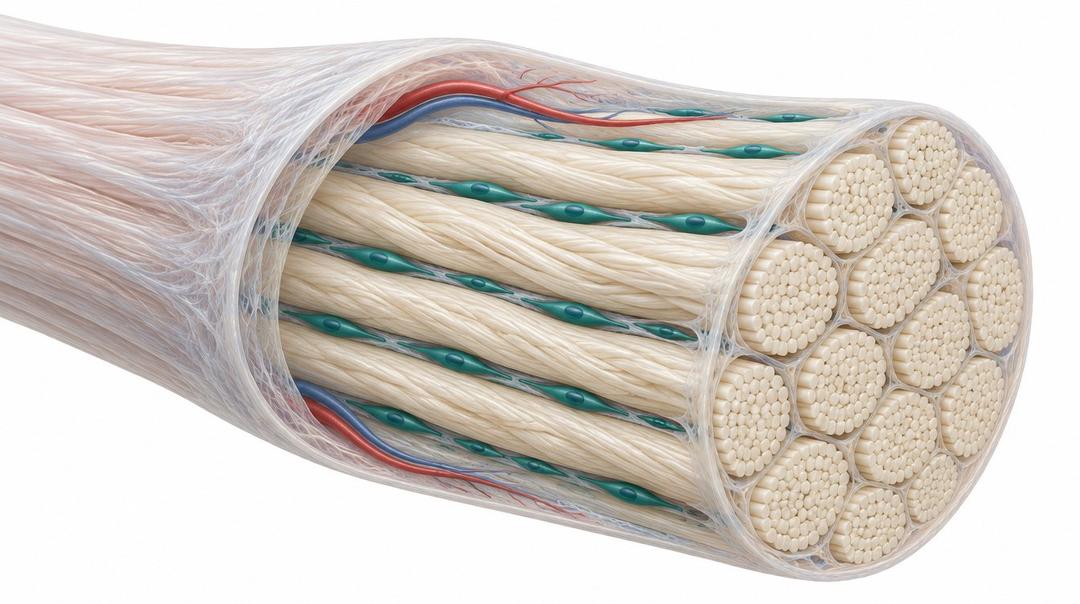
Preclinical BPC-157 studies have examined tissue responses in experimental tendon and ligament injury models, and contribute to hypotheses about the pathways involved. The central challenge is translation. Differences in loading, metabolism, experimental conditions and the nature of the injury between a rat and a person can substantially change outcomes, which is why small-animal results are a starting point rather than an answer.
Understanding thymosin beta-4
Thymosin beta-4 is a naturally occurring 43-amino-acid peptide best known for binding actin, the structural protein that shapes cells and lets them move. Because cell migration matters in so many processes, thymosin beta-4 has been studied in tissues including the skin, the cornea and the heart.
Findings from one tissue or system cannot be carried automatically to another. Work on the cornea, for example, does not establish an equivalent result in tendon or skeletal muscle. The cardiac literature is summarized in TB-500 and cardiac research.
Is TB-500 the same as thymosin beta-4?
No, and the distinction matters. The two names are often used interchangeably online, but the October 2026 orthopaedic review describes TB-500 as a distinct seven-amino-acid fragment of thymosin beta-4, frequently conflated with the full-length peptide despite no validated biological or clinical equivalence between them.
Structural differences of that size can change how a molecule behaves: its stability, its interactions, where it goes in the body and what it does. A study of full-length thymosin beta-4 is not evidence about a seven-residue fragment, which is why accurate identification of the molecule is essential when reading the literature. The difference is set out in TB-500 vs thymosin beta-4.
What did the October 2026 review find?
Tham, Hodgkins and Kennedy reviewed BPC-157, thymosin beta-4 and TB-500 for orthopaedic surgeons, searching the literature through June 2026 and covering mechanisms, musculoskeletal evidence, human data, product quality, regulation and anti-doping rules (PMID 42937313). Their main findings:
- BPC-157 has the largest body of direct musculoskeletal preclinical evidence of the three, mostly small-animal studies of tendon, ligament, muscle, joint inflammation and bone. Human musculoskeletal evidence is limited to one small, uncontrolled, retrospective case series without validated outcome measures.
- Thymosin beta-4 has broader experimental and human experience in eye, skin and heart research, but its direct musculoskeletal evidence is limited to cell and rodent studies, and those other findings cannot establish musculoskeletal effects.
- TB-500 cannot be assumed to be equivalent to full-length thymosin beta-4.
- Product quality is a concern for commercial products, including identity, purity, concentration, sterility and manufacturing consistency.
None of the three has an approved musculoskeletal indication or controlled human orthopaedic evidence, and the authors concluded that routine clinical use cannot currently be recommended. That does not end the value of studying the underlying mechanisms; it identifies the specific evidence still needed to show whether preclinical observations have clinical relevance. Why a case series cannot answer that question is explained in how to read a peptide study.
What makes regenerative peptide research scientifically interesting?
The interest extends beyond any single compound. Cell migration, cytoskeletal dynamics, extracellular matrix organization, vascular signalling and the regulation of inflammation are all still being worked out, and experimental peptides can help show how these systems respond under controlled conditions. Researchers use such findings to form hypotheses and design new experiments. The strongest progress comes when initial findings are independently reproduced and then tested in increasingly rigorous systems.
Comparing the research areas
| Compound | Main research interest | Important evidence consideration |
|---|---|---|
| BPC-157 | Tissue signalling and preclinical injury models | Human clinical evidence is a single uncontrolled case series |
| Thymosin beta-4 | Actin-related cell processes and tissue biology | Findings vary by tissue and model |
| TB-500 | A seven-residue fragment of thymosin beta-4 | Cannot be assumed equivalent to the full-length peptide |
For a side-by-side look at the two most discussed, see BPC-157 vs TB-500.
The NovaEvum perspective
Regenerative peptide research shows how molecular biology generates new questions about tissue function. BPC-157 and the thymosin-related compounds are interesting because their literature connects peptide chemistry with the cell processes behind structural tissue biology. The most useful discussions keep the mechanisms being investigated separate from clinical outcomes that have not been established, and treat each compound on its own structure, models and evidence rather than as interchangeable.
The future of BPC-157 and TB-500 research
Future work will need to address molecular identity, pharmacokinetics, exposure, reproducibility and safety. Well-designed human studies would be needed to show whether findings from experimental models have clinically meaningful applications, and the field would benefit from clearer terminology separating TB-500 from full-length thymosin beta-4.
Supplied here for laboratory use: BPC-157 and TB-500. For laboratory research use only.
Findings from preclinical models are not evidence of safe or effective treatment in people. Nothing here is medical, dosing, or therapeutic guidance.
Frequently asked questions
What is BPC-157 studied for? Mainly preclinical work on tissue signalling, gastrointestinal biology and experimental injury models.
What is the difference between BPC-157 and TB-500? They are unrelated molecules. BPC-157 is a 15-amino-acid peptide; TB-500 is described in the 2026 review as a seven-amino-acid fragment of thymosin beta-4.
Are TB-500 and thymosin beta-4 identical? No. The names are often used loosely, but the review distinguishes TB-500 from the full-length 43-amino-acid peptide.
Has BPC-157 been proven to help human tendons heal? No. Human musculoskeletal evidence is limited to one small uncontrolled case series, which cannot establish an effect.
Why are researchers interested in these peptides? Their experimental literature touches cell signalling, cytoskeletal organization and tissue responses relevant to regenerative biology.
Selected Research References
- Tham A, Hodgkins CW, Kennedy JG. Investigational Peptides in Orthopaedic Practice: Evidence, Safety, and Patient Counseling for BPC-157, Thymosin Beta-4, and TB-500. Journal of the American Academy of Orthopaedic Surgeons. 2026. pubmed.ncbi.nlm.nih.gov/42937313
Further reading
All products sold by NovaEvum are for research and laboratory use only. They are not intended for human or animal consumption, diagnosis, treatment, cure, or prevention of any disease.