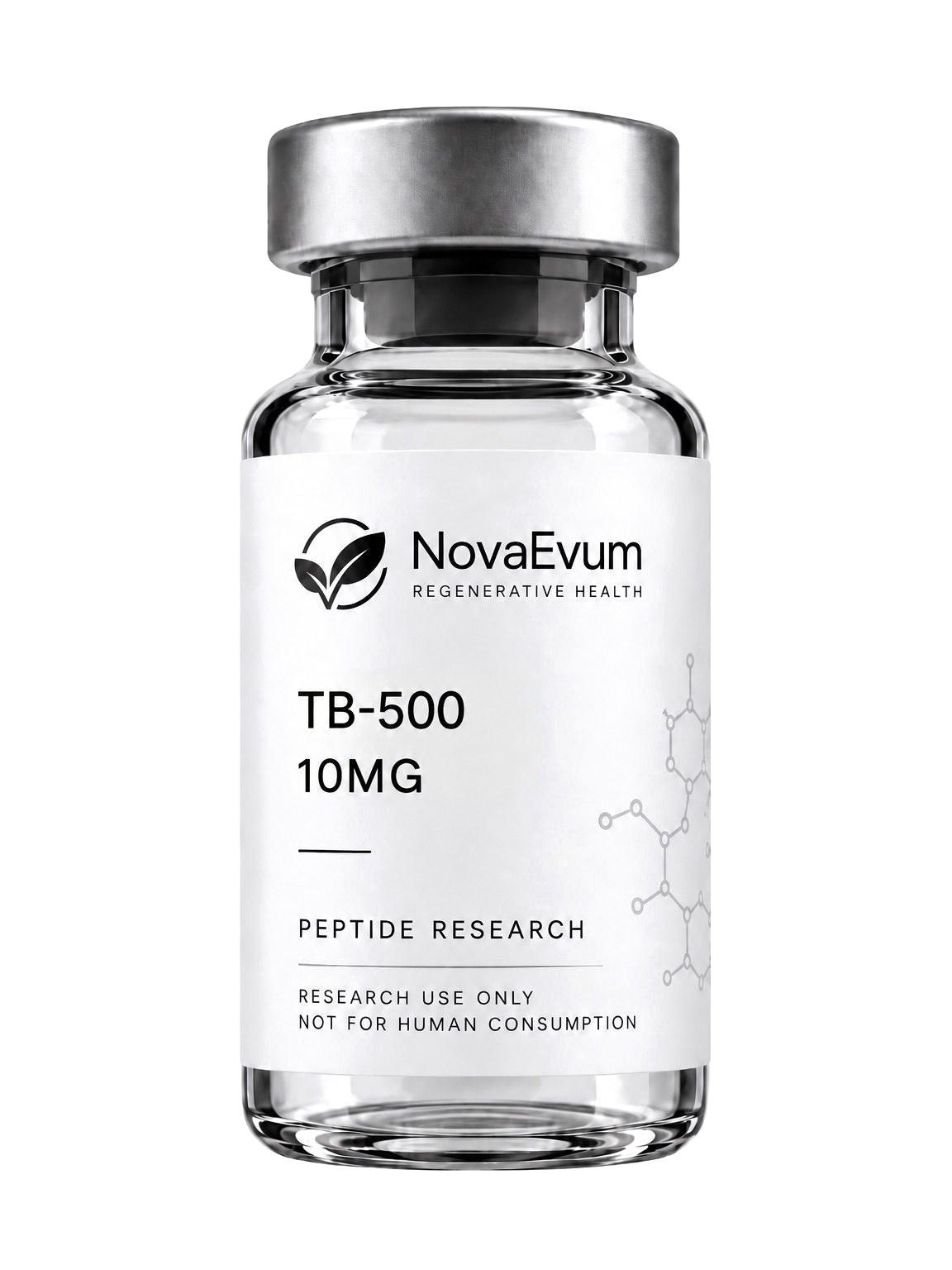
TB-500 research peptide, Canada
Thymosin beta-4 · Timbetasin · Shipped across Canada
Each vial contains 10 mg of TB-500.
TB-500 is a trade name, and it is used for two different molecules: the 43-amino-acid protein thymosin beta-4, and a seven-residue synthetic fragment of it, Ac-LKKTETQ. The certificate published for this vial identifies its contents as thymosin beta-4, the full protein, and the formula and molecular weight below are that protein’s. Work on the protein examines actin binding and cell migration in wound and cardiac injury models, and it reached clinical trials; the fragment has a separate and much smaller literature.
- Lyophilized powder, requires reconstitution
Price
$70.00 CAD
$7.00 / mg
In stock
- 24/7 customer support
- Lab tested purity & quality
- Free shipping on all orders




TB-500 in Canada
Ships from Toronto to anywhere in Canada, priced in Canadian dollars, payable by Interac e-Transfer or card.
Specification
- CAS number
- 77591-33-4
- Molecular formula
- C212H350N56O78S
- Molecular weight
- 4,963.4 g/mol
- Sequence
- SDKPDMAEIEKFDKSKLKKTETQEKNPLPSKETIEQEKQAGES
- Purity
- ≥ 99.18% by RP-HPLC
- Form
- Lyophilized powder
- Third-party assay
- Purity, fill and endotoxin
- Storage
- Refrigerated, 2-8 °C
- Lot
- NVE-2422-A
How it works
Two questions make up the whole of this fragment’s own literature: what it binds, and where cells went afterwards. Both were asked in animals. The third target below is the parent protein, and it is here to mark the boundary rather than to carry evidence across it — the human trials belong to thymosin beta-4 and to nothing in this vial.
Actin sequestration
What the fragment is characterised against
Animal work measures the fragment’s binding of G-actin, the monomeric form of actin. That sequestration is the biochemical question the papers ask; it is not a finding about tissue in a person.
Cell migration
What the animal models measured
Examined in animal wound and cardiac injury models as a question of cell movement. Where cells went, in an animal, under a microscope, is what those models recorded.
The full protein
Thymosin beta-4, a different molecule
The parent protein has its own human trials. Those trials belong to thymosin beta-4, not to this fragment, and reading one as the other is the error this page is written against. A finding about the full protein is not a finding about TB-500.
Where the evidence stands
Preclinical for the fragment. No controlled human trials have been published for TB-500. The full thymosin beta-4 protein has human data; that data is not this fragment’s. Not approved as a medicine.
Laboratory results
- Purity+Fill98.635%Janoshik · Sep 2026 · 10 mgOpen
- Purity+Fill99.18% purityUzorak · Jun 2026 · 10 mgOpen
- Endotoxin< 10 EU/VialUzorak · May 2026 · 10 mgOpen
- Purity+Fill97.991%Janoshik · Jul 2026 · 20 mg · a size we do not sellOpen
Opened as the laboratory issued them, unedited. Every certificate we publish
Research reading
New TB-500 research
All weekly research newsResearch use only
Supplied as a laboratory research chemical. Not a drug, food or cosmetic, and not for human or veterinary use. No application guidance is provided or implied.
What TB-500 is
TB-500 is a trade name rather than a scientific one, and that is why it names two molecules. The name emerged in equine sport, where anti-doping laboratories analysing material sold under it identified Ac-LKKTETQ — residues 17 to 23 of thymosin beta-4, with an acetyl group on the first residue. The first published detection method came from the Hong Kong Jockey Club’s laboratory. Material sold under the same name is also, often, the whole protein.
Thymosin beta-4 is a 43-amino-acid protein found in most cells, where it binds actin, the protein that forms part of the cell’s internal skeleton. Residues 17 to 23 are its actin-binding stretch, which is why that stretch was the fragment chosen.
Which one a vial holds is a question about that vial, not about the name on it. The certificate published for this one identifies thymosin beta-4, so the table below describes the protein.
| Property | This vial |
|---|---|
| Identified as | Thymosin beta-4 |
| Length | 43 amino acids |
| Molecular weight | About 4963 |
| The other molecule sold as TB-500 | Ac-LKKTETQ, 7 residues, about 889 |
TB-500 vs thymosin beta-4
Most of what is written about TB-500 is really about thymosin beta-4. The cardiac, corneal and wound studies, and the clinical trials, used the full protein. Papers on the protein are not papers on the fragment, and the difference is the single most important thing to know before reading either literature — or before reading a certificate.
| TB-500 | Thymosin beta-4 | |
|---|---|---|
| Length | 7 amino acids | 43 amino acids |
| What it is | A synthetic fragment | A protein found in most cells |
| Research of its own | Very little | Cell, animal and clinical trials |
| Told apart by | Mass spectrometry | Mass spectrometry |
TB-500 research: published studies
Work on the fragment itself is sparse. The most direct study, published in 2024, followed how Ac-LKKTETQ breaks down in human serum, in enzyme systems and in rats, and found it was cut quickly into smaller pieces. The authors noted that the biological activity of the acetylated fragment had not been documented, since earlier activity data concerned the sequence without its acetyl group.
The full protein went much further. It was examined in heart, eye and skin models in animals, and reached phase 2 and phase 3 trials, in chronic wounds and in dry eye, under the company RegeneRx. None of that transfers automatically to a seven-residue fragment.
How to tell which molecule is in the vial
By mass, not by label. A seven-residue fragment and a 43-residue protein differ in molecular weight by more than a factor of five, so mass spectrometry tells them apart unambiguously. HPLC purity alone cannot, because a pure sample of the wrong molecule still reads as pure.
That is the question the certificate for this vial answers, and its answer is thymosin beta-4. Read it under Laboratory results above rather than taking the name on the label as the molecule.
Buying TB-500 in Canada
NovaEvum ships TB-500 from Toronto to every province and territory, in 10 mg and 10 mg + spray atomizer sizes, priced in Canadian dollars.
Orders placed before 2:00 PM ET on a working day are dispatched the same day by tracked express parcel, which reaches most of Canada in one to two working days and remote areas a little later. In the Greater Toronto Area, larger orders placed before the cutoff can be couriered the same evening; the threshold is on our shipping page. Shipping is free on every order.
Pay by Interac e-Transfer, which takes 10% off the goods, or by card. Because the order ships from inside Canada, it never crosses a border: there is no customs declaration and no import hold.
Storage and laboratory handling
The specification for TB-500 is Refrigerated, 2-8 °C. Keep sealed vials refrigerated and away from light.
Lyophilised material tolerates ambient temperature in transit; put it back into cold storage on arrival. Let a cold vial reach room temperature before opening it, so moisture does not condense on the powder.
TB-500 FAQ
Is TB-500 the same as thymosin beta-4?
The name is used for both, which is the confusion worth clearing up first. TB-500 is a trade name, applied in research supply to the 43-amino-acid protein thymosin beta-4 and to Ac-LKKTETQ, a seven-residue fragment of it. The certificate published for this vial identifies its contents as the protein, and the formula and molecular weight in the spec table are the protein’s.
Why is it called TB-500?
The name has no published scientific origin. It emerged in equine sport as a trade name for a synthetic thymosin beta-4 fragment, and anti-doping laboratories identified the material as the acetylated sequence LKKTETQ.
Do thymosin beta-4 studies apply to TB-500?
Not automatically. The cardiac, corneal and wound studies and the clinical trials used the full 43-amino-acid protein. TB-500 is a seven-residue fragment of it, with very little published work of its own.
Which of the two does the certificate for this vial name?
Thymosin beta-4. The Uzorak report on the 10 mg size carries the comment “Identified as Thymosin Beta 4”, and the molecular weight stated on this page, 4963.4, is the protein’s rather than the fragment’s 889. A supplier who states only a purity percentage has not answered this question.
Which TB-500 sizes are available?
10 mg and 10 mg + spray atomizer, as lyophilised powder. The size selector above shows the current price and stock for each.
How is TB-500 shipped within Canada?
From Toronto by tracked express parcel, dispatched the same working day for orders before 2:00 PM ET. Most of Canada receives it in one to two working days. Shipping is free on every order.
How should TB-500 be stored?
At Refrigerated, 2-8 °C, sealed and away from light. Return it to cold storage on arrival.
Can I see a certificate of analysis before ordering?
Yes. Every certificate published for this compound is linked under Laboratory results on this page, stating the laboratory, the date and the vial size it covers. For the certificate covering a specific lot, contact us before ordering.
Is TB-500 for human use?
No. It is supplied as a laboratory research chemical: not a drug, food or cosmetic, and not for human or veterinary use. No application guidance is provided or implied.