
Research peptides · Canada
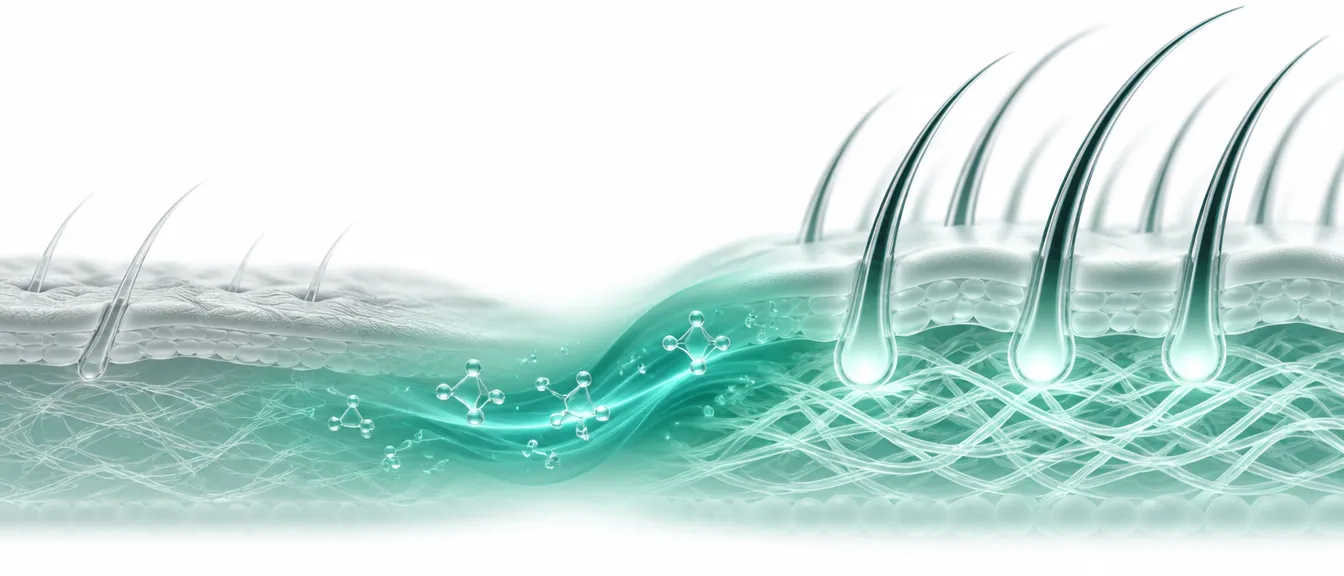
Skin, hair and aesthetics research peptides
5 compounds in Skin, hair & aesthetics
 CAS 89030-95-5
GHK-Cu
50 mgLyophilized99.84%
From$55.00 CAD Blend
KLOW
80 mgLyophilized99.87%
From$130.00 CAD CAS 189691-06-3
PT-141
10 mgLyophilized99.69%
From$55.00 CAD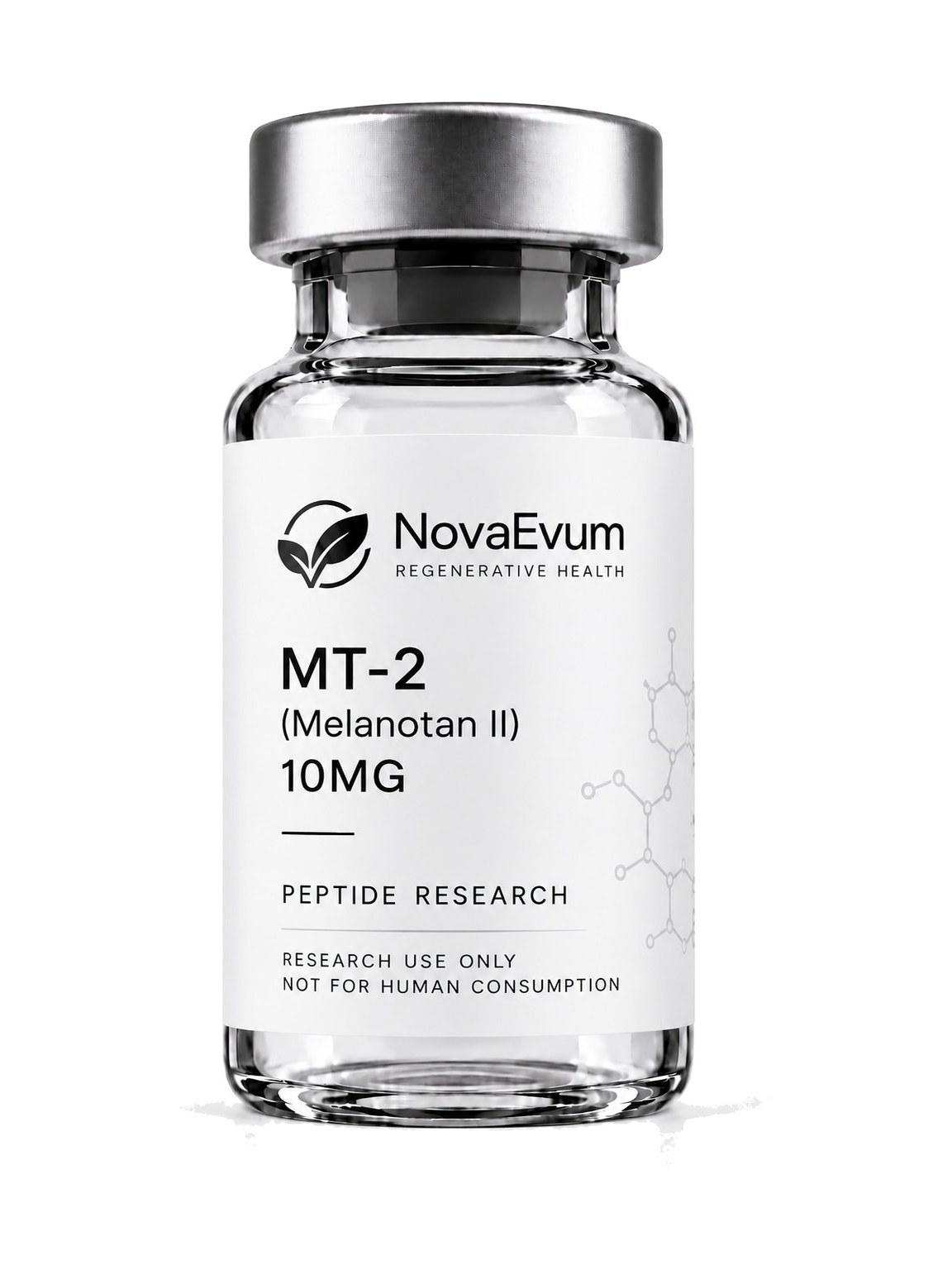 CAS 121062-08-6
Melanotan II
10 mgLyophilized99.89%
From$60.00 CAD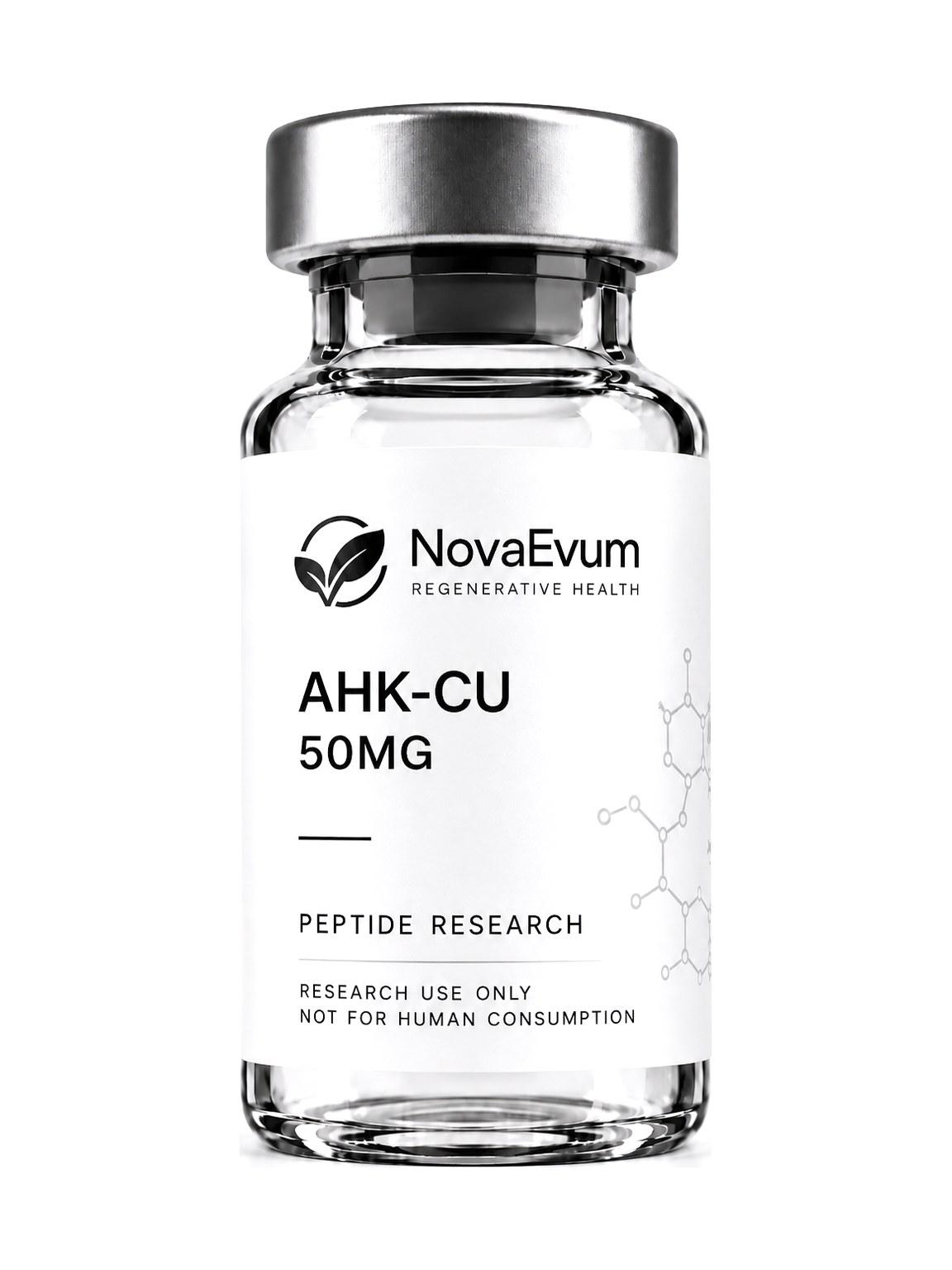 CAS 767286-83-9
AHK-Cu
50 mgLyophilized99.87%
From$50.00 CAD
Skin, hair and aesthetics research peptides in Canada
This category covers two families of compound and one blend: the copper peptides GHK-Cu and AHK-Cu, the melanocortin agonists Melanotan II and PT-141, and the four-component KLOW blend. All are supplied in Canada as lyophilised research material for laboratory use.
Copper peptides: GHK-Cu and AHK-Cu
GHK is the tripeptide glycyl-L-histidyl-L-lysine, first described in human plasma in 1973, with a strong affinity for copper(II). Bound to copper it forms GHK-Cu, and the copper is why the powder is blue. Its literature is largely cell culture and animal work on gene expression and on extracellular-matrix proteins such as collagen, alongside small human studies of topical cosmetic preparations. Those cosmetic studies are a separate literature from lyophilised research material.
AHK-Cu swaps the first residue for alanine: L-alanyl-L-histidyl-L-lysine, also complexed with copper. Its literature is far smaller, mostly cultured dermal papilla cells and isolated hair follicles studied outside the body, and no human trials have been published.
Melanocortin agonists: Melanotan II and PT-141
Melanotan II was developed at the University of Arizona in the 1980s as a cyclic analogue of alpha-melanocyte-stimulating hormone, more stable than the native hormone. It is non-selective, acting at several melanocortin receptors, including MC1R on pigment cells. Its human record is small early-phase studies; no phase 3 trial has been published, and case reports on unregulated use form part of the same literature.
PT-141, also known as bremelanotide, is a metabolite of Melanotan II. Its development focused on the MC4R receptor in the brain. An intranasal programme was discontinued; a later phase 3 programme, RECONNECT, studied bremelanotide in premenopausal women and was published. This is research material, not a medicine.
Five receptors, and why selectivity matters
There are five melanocortin receptors, MC1R to MC5R, and most of what separates the compounds in this family is which of them they reach. MC1R sits on melanocytes and is the receptor studied in pigmentation work. MC2R is the receptor for ACTH in the adrenal gland and responds to almost nothing else. MC3R and MC4R are expressed in the brain and studied in appetite and sexual-function research, and MC5R is found in exocrine glands.
Alpha-MSH itself acts at four of the five. Melanotan II, built to be more stable than alpha-MSH, keeps that broad profile, which is why its literature spans pigmentation, appetite and sexual function at once, and why side effects in its case reports are hard to attribute to any one receptor. PT-141 was pursued for a narrower MC4R-centred profile. Reading a melanocortin paper starts with asking which receptors the compound in it engages.
The copper peptides have a different handling question. The copper is held by the peptide rather than fixed to it, so strong chelators such as EDTA can strip it, and the colour of a solution is a quick check that the complex is intact.
KLOW, and what a blend certificate shows
KLOW combines GHK-Cu, KPV, TB-500 and BPC-157. No study has examined that mixture as such: each component has its own literature, and findings for one do not transfer to the combination.
What a blend needs from its certificate is a measured mass for each component, not just an overall purity, because a mixture can be pure and still not be the ratio on the label. The KLOW certificate published here reports all four separately.
Compare the compounds
| Compound | Molecule | Evidence reached | Sizes | Mol. weight | Certificate published |
|---|---|---|---|---|---|
| GHK-Cu | Copper tripeptide complex | Cell and animal; small topical human studies | 50 mg, 100 mg | 403.94 g/mol | Every size |
| KLOW | Four-component blend | None for the mixture | 80 mg | Blend | Every size |
| PT-141 | Melanocortin receptor agonist | Phase 3, published | 10 mg | 1025.16 g/mol | Every size |
| Melanotan II | Cyclic alpha-MSH analogue | Small early-phase human studies | 10 mg | 1024.18 g/mol | Every size |
| AHK-Cu | Copper tripeptide complex | Cell and tissue studies | 50 mg, 100 mg | 415.94 g/mol | Not yet |
Every certificate is on the testing page, as the laboratory issued it. New to buying in Canada? Read how to check a research peptide supplier, or see what shipping research peptides across Canada involves.
Skin, hair & aesthetics questions
- What is the difference between GHK-Cu and AHK-Cu?
- One amino acid. GHK-Cu begins with glycine, AHK-Cu with alanine; both bind copper(II). GHK-Cu has the larger literature, and AHK-Cu’s is mostly hair-follicle cell and tissue work.
- How is PT-141 related to Melanotan II?
- PT-141 (bremelanotide) is a metabolite of Melanotan II. Melanotan II acts at several melanocortin receptors; PT-141’s development centred on MC4R and reached a published phase 3 programme.
- Has the KLOW blend been studied?
- Not as a mixture. Each of its four components has its own literature, and its certificate reports a measured mass for each one.
- Why is GHK-Cu powder blue?
- Copper(II) complexes absorb red light, so they look blue. The colour comes from the bound copper, not from a dye.
Research articles on these compounds
- GHK-Cu and the Future of Regenerative Skincare: What's Next in 2027?5 min
- GHK-Cu and photoageing: what the UV-damage literature actually examines7 min
- Inside the KLOW blend: the four components, and how far the literature on each one goes8 min
- Peptides in 2027: The Biggest Breakthroughs and Compounds to Watch6 min
- What Is AHK-Cu? The Copper Tripeptide, Its Chemistry and Its Thin Literature9 min
- Conflicts of Interest in Research: How Funding and Allegiance Shape Results10 min