
Selank
Semax vs Selank: two Russian heptapeptides, two different literatures
CL
· 6 min read
A summary of published research, with citations. It states no amount, schedule or route, and makes no claim about what this compound does in a person. Supplied for laboratory research use only.
On this page · 7 sections
Semax and Selank are compared constantly, and for understandable reasons. Both are seven amino acids long. Both were developed at the Institute of Molecular Genetics of the Russian Academy of Sciences. Both end in the same three residues, Pro-Gly-Pro. Both are registered medicines in Russia and approved nowhere else.
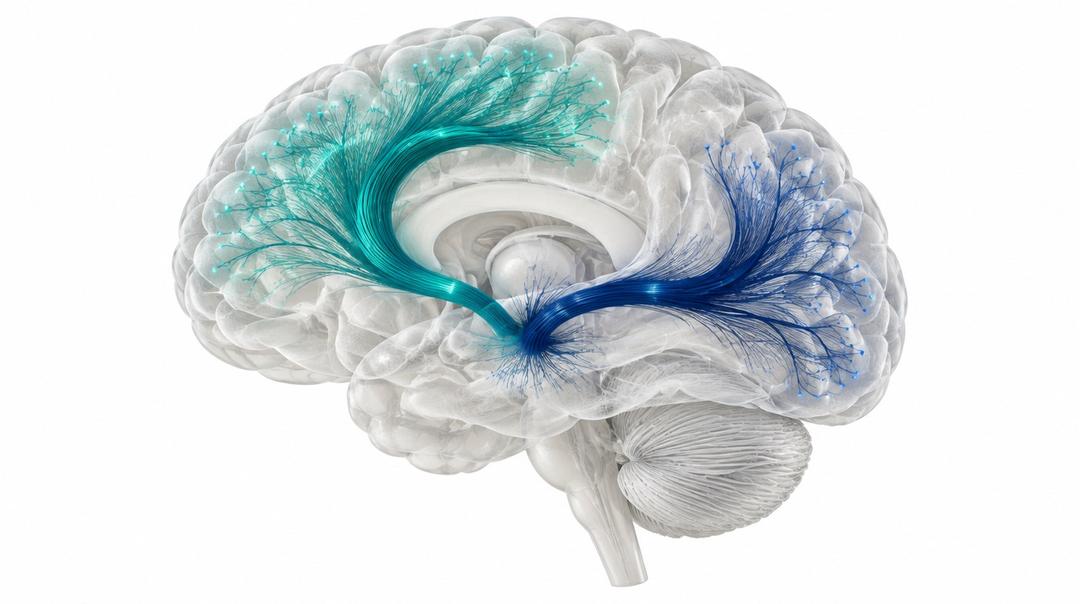
Past that, they are different molecules with different parent peptides, and the research on each asks different questions. This page sets the two side by side, so that a paper about one is not read as a paper about the other.
Two parents, one tail
The shared Pro-Gly-Pro ending is the reason the two look like siblings. It was added to both for the same purpose: short natural peptides are broken down in plasma within minutes, and the proline-rich tail slows that down.
The first four residues are where the molecules part ways.
| Semax | Selank | |
|---|---|---|
| Sequence | Met-Glu-His-Phe-Pro-Gly-Pro | Thr-Lys-Pro-Arg-Pro-Gly-Pro |
| Parent peptide | ACTH(4-10), a fragment of adrenocorticotropic hormone | Tuftsin, an immunomodulatory tetrapeptide from immunoglobulin G |
| Research framing | Neuroprotection, cerebral ischaemia, neurotrophins | Anxiety-related behaviour, GABAergic signalling, immune gene expression |
| Status in Russia | Registered medicine | Registered medicine |
| Status in Canada, the US and the EU | Not approved | Not approved |
So Semax is a melanocortin-derived peptide with the hormonal activity engineered out, and Selank is an immune peptide extended into the nervous system. The tail is common; the part that does the binding is not.
What the Semax literature examined
The Semax work is concentrated on the brain under injury. Dolotov and colleagues reported that Semax binds specifically in rat brain tissue and raises levels of brain-derived neurotrophic factor (PMID 16635254), and in a second study that it regulates BDNF and its receptor trkB in the rat hippocampus (PMID 16996037). Medvedeva and colleagues measured how Semax and its Pro-Gly-Pro fragment changed the expression of VEGF-family genes in a rat model of focal ischaemia (PMID 22772900).
There is human research too, most of it Russian clinical work in ischaemic stroke. Gusev and colleagues reported on Semax added to standard care in the acute period of hemispheric stroke, in a small comparison against conventionally treated patients (PMID 11517472). As the Semax research page sets out, that clinical literature is published largely in Russian, comes from one research tradition, and has not been replicated in Western trials.
What the Selank literature examined
Selank's work is framed around behaviour and its molecular correlates. Kozlovskii and Danchev examined it in a conditioned avoidance model in rats (PMID 14552529). Volkova and colleagues measured changes in the expression of genes involved in GABAergic neurotransmission (PMID 26924987), and Vyunova and colleagues reported, in radioligand binding work on brain membranes, that Selank behaves as a positive allosteric modulator of GABA binding (PMID 30255741).
Because the parent peptide is tuftsin, part of the Selank literature is also about immune signalling: Kolomin and colleagues measured the expression of inflammation-related genes in mouse spleen after Selank (PMID 21609736). That thread has no counterpart in the Semax work.
One study looked at both
Panikratova and colleagues examined Selank, Semax and placebo in the same study, using resting-state functional MRI in 52 healthy participants and measuring changes in functional connectivity, chiefly involving the amygdala (PMID 32342318). It is one of very few places where the two are measured under the same conditions.
It is also a good illustration of where the evidence stops. The endpoint was a change in connectivity on a scan. That is a measurement of brain activity in a small group over minutes, not a finding about anxiety, memory or anything a person would notice.
Reading the two literatures
A Semax paper does not describe Selank. The shared tail does not make them interchangeable, and results for one do not transfer to the other. The same caution applies to the acetylated and amidated derivatives of Semax; N-acetyl Semax amidate is a third molecule with a literature of its own.
Most of the evidence comes from one country. The bulk of both literatures was produced by Russian groups, often the same institute that developed the molecules, and much of it is published in Russian-language journals. That does not make it wrong. It does mean independent replication is thin.
Registration in Russia is not approval here. Neither molecule has been reviewed by Health Canada, the FDA or the EMA. What Health Canada's rules mean for research peptides covers the Canadian side.
Animal endpoints are not outcomes in people. Gene expression, neurotrophin levels and avoidance behaviour in rodents are facts about a model. They are where most of this research ends.
Common questions
Is Selank just Semax for anxiety? No. The two share a three-residue tail and an institute of origin, but Semax is derived from a fragment of ACTH and Selank from tuftsin. Their research literatures examine different systems.
Which one has more human research? Semax, mostly in Russian stroke studies. Both have far less human data than an approved medicine, and almost none from outside Russia.
Are they approved in Canada? No. Both are sold here as research chemicals for laboratory use only.
Semax and Selank are both supplied here, as Semax and Selank. Independently tested by HPLC; 100% synthetic. The laboratory's certificate for each lot is linked from its product page. For laboratory research use only.
References
- Dolotov OV, Karpenko EA, Inozemtseva LS, et al. Semax, an Analog of Adrenocorticotropin (4-10), Binds Specifically and Increases Levels of Brain-Derived Neurotrophic Factor Protein in Rat Basal Forebrain. Journal of Neurochemistry. 2006;97(s1):82-86. pubmed.ncbi.nlm.nih.gov/16635254
- Dolotov OV, Karpenko EA, Seredenina TS, et al. Semax, an Analog of ACTH(4-10) with Cognitive Effects, Regulates BDNF and trkB Expression in the Rat Hippocampus. Brain Research. 2006;1117(1):54-60. pubmed.ncbi.nlm.nih.gov/16996037
- Medvedeva EV, Dmitrieva VG, Povarova OV, et al. Effect of Semax and Its C-Terminal Fragment Pro-Gly-Pro on the Expression of VEGF Family Genes and Their Receptors in Experimental Focal Ischemia of the Rat Brain. Journal of Molecular Neuroscience. 2013;49(2):328-333. pubmed.ncbi.nlm.nih.gov/22772900
- Gusev EI, Skvortsova VI, Miasoedov NF, et al. Effectiveness of Semax in Acute Period of Hemispheric Ischemic Stroke. Zhurnal Nevrologii i Psikhiatrii Imeni S.S. Korsakova. 1997;97(6):26-34. pubmed.ncbi.nlm.nih.gov/11517472
- Kozlovskii II, Danchev ND. The Optimizing Action of the Synthetic Peptide Selank on a Conditioned Active Avoidance Reflex in Rats. Neuroscience and Behavioral Physiology. 2003;33(7):639-643. pubmed.ncbi.nlm.nih.gov/14552529
- Volkova A, Shadrina M, Kolomin T, et al. Selank Administration Affects the Expression of Some Genes Involved in GABAergic Neurotransmission. Frontiers in Pharmacology. 2016;7:31. pubmed.ncbi.nlm.nih.gov/26924987
- Vyunova TV, Andreeva L, Shevchenko K, Myasoedov N. Peptide-based Anxiolytics: The Molecular Aspects of Heptapeptide Selank Biological Activity. Protein and Peptide Letters. 2018;25(10):914-923. pubmed.ncbi.nlm.nih.gov/30255741
- Kolomin T, Shadrina M, Andreeva L, et al. Expression of Inflammation-Related Genes in Mouse Spleen under Tuftsin Analog Selank. Regulatory Peptides. 2011;170(1-3):18-23. pubmed.ncbi.nlm.nih.gov/21609736
- Panikratova YR, Lebedeva IS, Sokolov OY, et al. Functional Connectomic Approach to Studying Selank and Semax Effects. Doklady Biological Sciences. 2020;490(1):9-11. pubmed.ncbi.nlm.nih.gov/32342318
All products sold by NovaEvum are for research and laboratory use only. They are not intended for human or animal consumption, diagnosis, treatment, cure, or prevention of any disease.