
Copper peptides
Why GHK-Cu Can Sting or Irritate: Chemistry, Formulation and Evidence
IM
· 2 min read
A summary of published research, with citations. It states no amount, schedule or route, and makes no claim about what this compound does in a person. Supplied for laboratory research use only.
On this page · 6 sections
Quick answer: Irritation reports cannot identify a single cause. The copper complex, solution properties, excipients, contaminants and method of exposure can all matter; visible reactions are not proof that a product is potent or authentic.
What the molecule contains
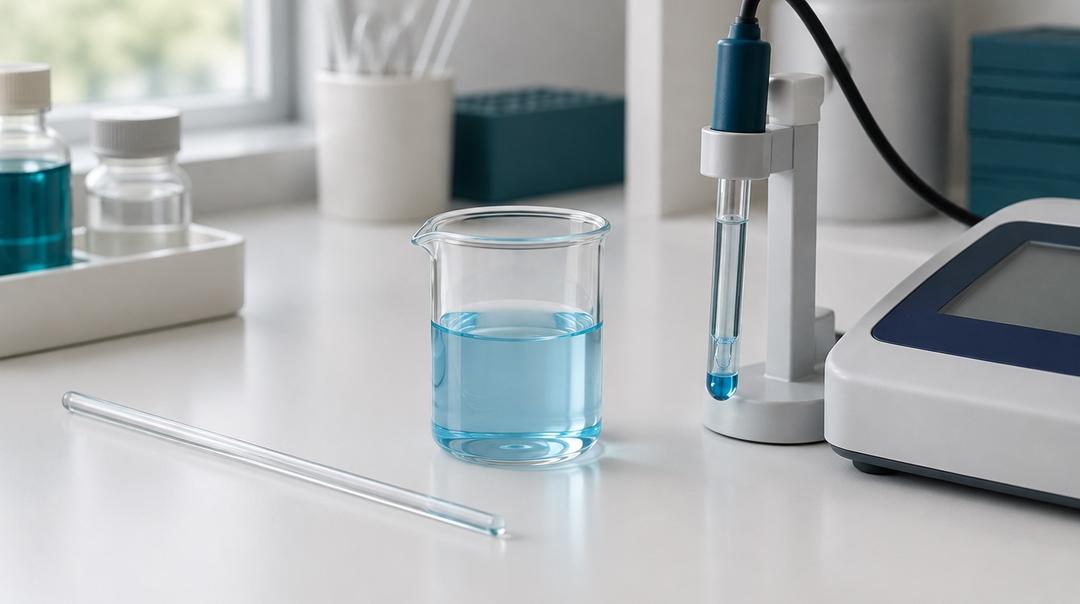
GHK-Cu is a metal–peptide complex, not an inert blue dye. Copper coordination affects chemical behaviour, and changing the formulation environment may change the species present. Colour alone does not establish identity, concentration or purity.
Formulation variables worth investigating
Researchers evaluating irritation in appropriate laboratory models examine pH, osmolality, concentration, residual synthesis impurities, preservatives and compatibility with materials. A report of burning or a welt in a person is a safety concern, not a chemistry experiment to troubleshoot at home.
What skin research does and does not tell us
Much of the commonly cited GHK-Cu literature involves fibroblasts, extracellular-matrix pathways and topical cosmetic contexts. It cannot establish the safety of an unapproved injectable preparation. Route of exposure changes the risk profile considerably.
How to evaluate a laboratory claim
Look for lot-linked identity testing, a defined purity method, content quantitation and appropriate contaminant testing for the intended research application. A chromatogram is not a certificate of sterility or a guarantee of clinical safety. Suspected serious reactions warrant professional medical assessment.
Frequently asked questions
Is stinging proof that GHK-Cu is working? No. Discomfort is not a validated effectiveness marker.
Can purity alone rule out irritation? No. Formulation and microbial or particulate quality are separate issues.
Supplied here for laboratory use: GHK-Cu. The laboratory's certificate for each lot is linked from its product page. For laboratory research use only.
Further reading
All products sold by NovaEvum are for research and laboratory use only. They are not intended for human or animal consumption, diagnosis, treatment, cure, or prevention of any disease.