
GLP-1 and metabolic
Beyond GLP-1: Why Amylin Peptides Could Be the Next Major Breakthrough
EW
· 4 min read
A summary of published research, with citations. It states no amount, schedule or route, and makes no claim about what this compound does in a person. Supplied for laboratory research use only.
On this page · 7 sections
For years, GLP-1 has dominated discussion of metabolic peptide research. From semaglutide to tirzepatide, hormone-targeted therapeutics have shown how changing specific signalling pathways can influence appetite regulation, blood glucose and body weight. But researchers are now looking beyond GLP-1.
One of the most active areas involves amylin, a naturally occurring peptide hormone with a distinct role in metabolic regulation.
What is amylin?
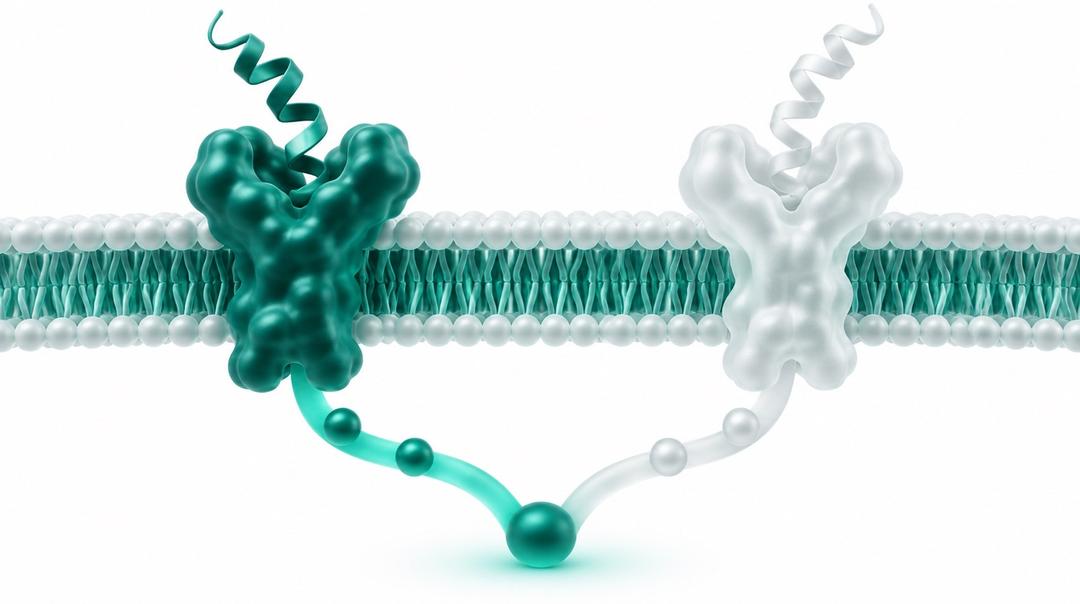
Amylin is a 37-amino-acid peptide hormone produced by pancreatic beta cells. It is normally released alongside insulin after food intake, and it takes part in promoting fullness, slowing gastric emptying, modulating post-meal glucagon secretion and influencing central pathways involved in food intake. It was discovered in 1986, and pramlintide, a human amylin analogue, became the first amylin-based drug, approved as an adjunct to insulin in diabetes (Secher and colleagues, 2026).
Although GLP-1 and amylin can both influence satiety, they act through different receptor systems. Amylin receptors form when the calcitonin receptor pairs with an accessory protein, as set out in amylin receptors explained. Researchers are investigating whether targeting complementary pathways can do more than either system alone.
Why cagrilintide matters
Cagrilintide is a long-acting amylin analogue developed by Novo Nordisk. Its design gives it far longer activity than native amylin, which makes it suitable for study as a longer-acting compound. The most prominent programme combines it with semaglutide as CagriSema.
The scientific rationale is that GLP-1 and amylin signalling influence overlapping but distinct metabolic mechanisms, so combining them may have a broader effect on appetite and body-weight regulation. A 2026 review reports weight loss of up to 22.7% with CagriSema in a 68-week phase 3a study (Panou and colleagues, 2026). Efficacy, tolerability and how it compares must still be weighed against the full range of available treatments. The trials are covered in CagriSema's REDEFINE trials and the compound in cagrilintide research.
Zenagamtide: a different approach
Zenagamtide, previously called amycretin, combines GLP-1 and amylin receptor activity within one molecule. Instead of two separate molecular entities, researchers can study a single engineered compound designed to engage both receptor systems.
Early trials produced encouraging findings, but larger phase 3 studies are needed to establish its overall clinical profile. The key questions are whether a single molecule offers any advantage in durability, tolerability, convenience or metabolic outcomes beyond body weight. The published trials are in amycretin research.
Eloralintide and selective amylin research
Not every amylin-based candidate is designed to be paired with GLP-1. Eloralintide, from Eli Lilly, is being studied as a selective amylin-receptor agonist, a parallel strategy that asks what amylin signalling can achieve by itself. That could help separate the effects that arise from amylin biology from those that need other hormone pathways. Other investigational agents, including petrelintide, add further diversity to the field. Its phase 2 results are in eloralintide research.
| Candidate | Design | Developer |
|---|---|---|
| Cagrilintide (with semaglutide as CagriSema) | Long-acting amylin analogue, paired with a GLP-1 agonist | Novo Nordisk |
| Zenagamtide (amycretin) | One molecule acting at GLP-1 and amylin receptors | Novo Nordisk |
| Eloralintide | Selective amylin-receptor agonist | Eli Lilly |
| Petrelintide | Long-acting amylin analogue | Zealand Pharma |
The questions researchers must answer
Can amylin-based candidates produce durable metabolic improvements across different populations? How do their adverse-event profiles compare with established therapies? Can combinations improve outcomes without adding tolerability problems? And can clinical benefits extend beyond the number shown on a scale?
These questions matter as obesity medicine weighs cardiovascular health, metabolic disease, adherence and long-term outcomes.
Amylin research illustrates a broader principle in molecular biology: understanding how different signalling pathways interact can be just as important as discovering an entirely new target.
What to expect in 2027
With several amylin-related compounds advancing through clinical development, 2027 is positioned to bring further trial results, regulatory decisions and comparative evidence. The next phase of metabolic peptide research may involve increasingly precise combinations of hormone signalling systems.
The next major development in metabolic peptides may come from understanding how hormones work together.
Cagrilintide, CagriSema, zenagamtide, eloralintide and petrelintide are investigational. Nothing here is medical, dosing or therapeutic guidance.
Selected Research References
- Secher A, Lutz TA, Raun K. The story of amylin: from physiology to therapy. Nature Metabolism. 2026;8(2):299-312. pubmed.ncbi.nlm.nih.gov/41708975
- Panou T, Gouveri E, Popovic DS, Papanas N. New Amylin-Based Agonists for the Treatment of Obesity and Type 2 Diabetes Mellitus. Diabetes Therapy. 2026;17(11):1613-1638. pubmed.ncbi.nlm.nih.gov/42803913
Further reading
All products sold by NovaEvum are for research and laboratory use only. They are not intended for human or animal consumption, diagnosis, treatment, cure, or prevention of any disease.