
Semax
Semax vs Noopept: A Heptapeptide and a Dipeptide Prodrug Compared
CL
· 9 min read
A summary of published research, with citations. It states no amount, schedule or route, and makes no claim about what this compound does in a person. Supplied for laboratory research use only.
On this page · 6 sections
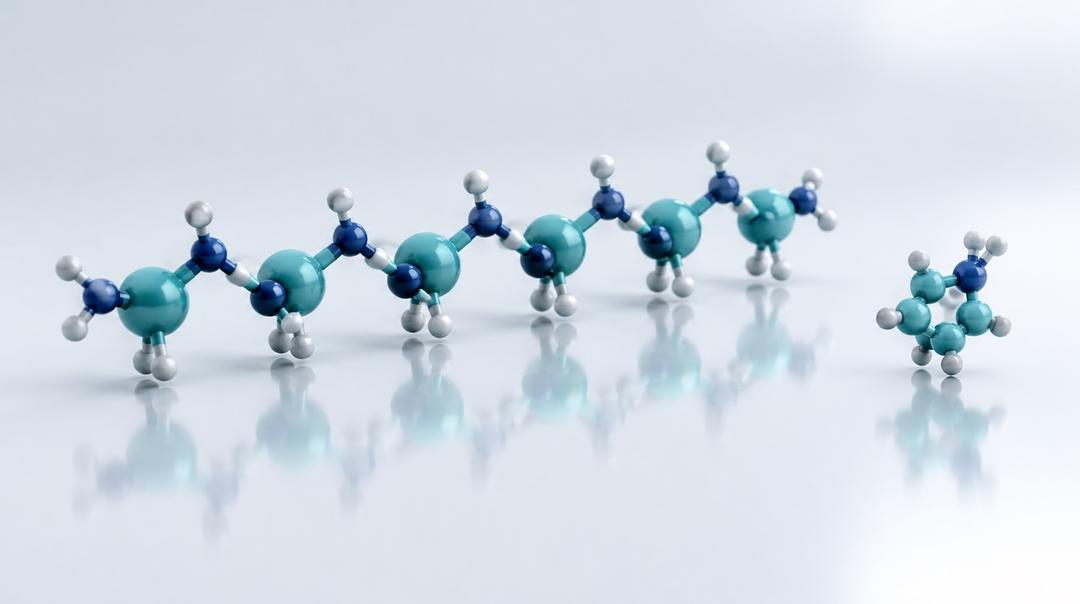
Semax and Noopept both come out of Moscow pharmacology institutes and both are used as medicines in Russia, but they are very different molecules. Semax is a seven-residue peptide, Met-Glu-His-Phe-Pro-Gly-Pro, built from a fragment of adrenocorticotropic hormone. Noopept is N-phenylacetyl-L-prolylglycine ethyl ester, a small acylated dipeptide designed as a peptide analogue of piracetam, which appears to act largely through a metabolite. Neither is approved in Canada, the United States or the EU, and no trial has compared them.
What is each molecule?
Semax is an analogue of ACTH(4-10). Its first four residues, Met-Glu-His-Phe, are the ACTH(4-7) sequence; the last three, Pro-Gly-Pro, are a glyproline tail that its developers associate with greater stability in the body (Ashmarin and colleagues, PMID 15837162). Much of its pharmacology was worked out at the Institute of Molecular Genetics of the Russian Academy of Sciences, and it shares its Pro-Gly-Pro tail with Selank, as Semax vs Selank explains. It is a true peptide: seven natural amino acids in an unmodified chain.
Noopept, also known by its development code GVS-111 and the international name omberacetam, was designed at the Zakusov Institute of Pharmacology. Its developers describe it as a dipeptide analogue of the cognition-research drug piracetam (Ostrovskaya and colleagues, PMID 25096780). Chemically it is a proline-glycine dipeptide with an N-phenylacetyl cap and an ethyl ester, which makes it a small, uncharged molecule better described as a dipeptide-derived small molecule than as a peptide in the sense Semax is. A recent structural study classed it with the racetam family despite its different chemistry (Araj and colleagues, PMID 39298839).
Side by side
| Semax | Noopept | |
|---|---|---|
| Identity | Met-Glu-His-Phe-Pro-Gly-Pro; heptapeptide | N-phenylacetyl-L-prolylglycine ethyl ester (GVS-111, omberacetam) |
| Class | ACTH(4-10) analogue; regulatory peptide | Acylated dipeptide ester; racetam-related nootropic |
| Proposed mechanism | Specific binding sites in rat forebrain; raised BDNF in rodent brain | Converted to cyclo-prolylglycine in rats; HIF-1 activation in cells |
| Evidence stage | Rodent studies; small Russian clinical studies, mostly non-randomised | Rodent and cell studies; small Russian clinical comparisons with piracetam |
| Regulatory status | Used in Russian clinical practice; not approved in Canada, the US or the EU | Prescription-only in Russia; not authorised in the EU; not approved in the US or Canada |
| What was measured | BDNF and gene expression in rodents; neurological scales in stroke patients | Metabolites in rat brain; transcription-factor activity in cultured cells; cognitive scales |
How do their proposed mechanisms differ?
They point in different directions, and both rest on work from the groups that developed them.
For Semax, the best-documented finding is about neurotrophins. Dolotov and colleagues reported specific, reversible, calcium-dependent binding of labelled Semax to membranes from rat basal forebrain, and a rapid rise in BDNF protein in that region, but not in the cerebellum, within three hours in rats (PMID 16635254). A companion paper reported changes in BDNF and its receptor trkB in the rat hippocampus (PMID 16996037). Binding sites are not a cloned receptor, and BDNF in rat brain tissue is a marker, not a behavioural or clinical outcome. The Semax neuroprotection article goes through the rest of the rodent literature.
For Noopept, the key finding is that the molecule may not be the active agent. Gudasheva and colleagues could not detect GVS-111 itself in rat brain one hour after administration. Of its candidate metabolites, only cyclo-prolylglycine rose, about 2.5-fold, and the authors proposed that Noopept is a prodrug for this cyclic dipeptide, which also occurs naturally in the brain (PMID 9358206). A later cell study from the same institute reported that Noopept raised the DNA-binding activity of HIF-1, and of none of eight other transcription factors tested, in cultured human kidney cells, with docking calculations suggesting it could fit the active site of prolyl hydroxylase 2 (Vakhitova and colleagues, PMID 27099787). That is a reporter assay and a computer model. It proposes a mechanism; it does not establish one in a living brain.
So one is a peptide studied as a ligand with a putative binding site, and the other is a small molecule studied partly as a prodrug. Results for one cannot be read across to the other.
The two are often sold side by side under the label "nootropic", a marketing category rather than a pharmacological one. It groups molecules by the hope attached to them, not by target, structure or evidence. Semax's nearest relatives are other melanocortin fragments and glyproline peptides; Noopept's are piracetam and the racetams. A reader comparing them is comparing two separate research programmes that happen to share a country of origin and a sales shelf.
What human evidence exists for each?
Both clinical literatures were produced almost entirely in Russia, in small studies, often published in Russian, and many are not randomised.
For Semax, Gusev and colleagues compared 30 patients with acute ischaemic stroke who received Semax alongside conventional therapy with 80 patients of similar severity given conventional therapy alone, and reported some influence on the rate at which neurological deficits receded (PMID 11517472). The control group was a comparison series, not a randomised arm. A later study followed 110 stroke patients for five months, divided into early and late rehabilitation groups with and without Semax, and reported higher plasma BDNF and better Barthel index scores in those who received it (Gusev and colleagues, PMID 29798983). The abstract does not describe random allocation. The Semax and cerebral ischaemia article covers why much of this record is hard to assess from outside Russia.
For Noopept, the most cited clinical paper is Neznamov and Teleshova's comparison with piracetam in patients with mild cognitive disorders after vascular or traumatic brain disease (PMID 19234797). PubMed carries no abstract for it, and its results are not summarised here because they could not be read and checked. Other Russian clinical reports exist, in mild cognitive impairment after stroke and in other conditions, mostly small and open.
Neither compound has a registered trial on ClinicalTrials.gov, and neither has the kind of large, independently replicated, pre-registered randomised trial that a regulator outside Russia would require. The study design guide explains why that gap matters more than any single result.
Where are they approved, and where are they not?
Both are part of Russian clinical practice. A 2026 Russian expert council on adjunctive treatment in ADHD listed Semax among the medications used in Russian practice and placed it in the group with a limited evidence base (PMID 42910684). A market surveillance study by 12 European and Australian official medicines control laboratories described Noopept as a drug available only on prescription in Russia and not authorised in Europe, and reported intercepting it as bulk raw material (Vanhee and colleagues, PMID 40558871).
Outside Russia, neither is an approved medicine. Neither is authorised by Health Canada, the US Food and Drug Administration or the European Medicines Agency. In the United States, omberacetam has been found in supplements sold for memory: Cohen and colleagues detected it among five unapproved drugs in cognitive-enhancement products, and found 75% of declared quantities inaccurate (PMID 34484905). How Health Canada's framework treats such compounds is covered in what Health Canada's rules mean for research peptides.
Supplied here for laboratory use: Semax. The laboratory's certificate for each lot is linked from its product page. For laboratory research use only.
NovaEvum does not carry Noopept. For a modified form of Semax, see N-acetyl Semax amidate vs Semax. Nothing here is medical, dosing, or therapeutic guidance.
Frequently asked questions
Is Noopept a peptide like Semax? Not in the same sense. Semax is a chain of seven natural amino acids. Noopept is built from two, proline and glycine, but capped with a phenylacetyl group and an ethyl ester, which makes it a small uncharged molecule. Its developers call it a dipeptide; structurally it behaves more like a small-molecule drug and is often grouped with the racetams.
Do Semax and Noopept work the same way? The proposed mechanisms differ. Semax research centres on specific binding sites in rat forebrain and raised BDNF in rodent brain. Noopept research suggests it is converted to cyclo-prolylglycine and reports HIF-1 activation in cultured cells. Both mechanisms come mainly from the developers' own laboratories and neither is established in people.
Has any study compared Semax and Noopept? No published study has tested them against each other. Each has small Russian clinical studies of its own, Semax mostly in stroke and Noopept mostly in mild cognitive impairment against piracetam, with different designs, endpoints and populations. Those results cannot be ranked against each other.
Is either approved in Canada? No. Neither Semax nor Noopept is an approved drug in Canada, and neither is approved by the US Food and Drug Administration or the European Medicines Agency. Both are used as medicines in Russia. Semax sold here is a laboratory reagent for research use only.
Selected Research References
- Dolotov OV, Karpenko EA, Seredenina TS, et al. Semax, an analogue of adrenocorticotropin (4-10), binds specifically and increases levels of brain-derived neurotrophic factor protein in rat basal forebrain. Journal of Neurochemistry. 2006;97 Suppl 1:82-86. pubmed.ncbi.nlm.nih.gov/16635254
- Gusev EI, Skvortsova VI, Miasoedov NF, et al. Effectiveness of semax in acute period of hemispheric ischemic stroke (a clinical and electrophysiological study). Zhurnal Nevrologii i Psikhiatrii Imeni S.S. Korsakova. 1997;97(6):26-34. pubmed.ncbi.nlm.nih.gov/11517472
- Gusev EI, Martynov MY, Kostenko EV, et al. The efficacy of semax in the tretament of patients at different stages of ischemic stroke. Zhurnal Nevrologii i Psikhiatrii Imeni S.S. Korsakova. 2018;118(3 Pt 2):61-68. pubmed.ncbi.nlm.nih.gov/29798983
- Gudasheva TA, Boyko SS, Ostrovskaya RU, et al. The major metabolite of dipeptide piracetam analogue GVS-111 in rat brain and its similarity to endogenous neuropeptide cyclo-L-prolylglycine. European Journal of Drug Metabolism and Pharmacokinetics. 1997;22(3):245-252. pubmed.ncbi.nlm.nih.gov/9358206
- Vakhitova YV, Sadovnikov SV, Borisevich SS, et al. Molecular mechanism underlying the action of substituted Pro-Gly dipeptide Noopept. Acta Naturae. 2016;8(1):82-89. pubmed.ncbi.nlm.nih.gov/27099787
- Neznamov GG, Teleshova ES. Comparative studies of Noopept and piracetam in the treatment of patients with mild cognitive disorders in organic brain diseases of vascular and traumatic origin. Neuroscience and Behavioral Physiology. 2009;39(3):311-321. pubmed.ncbi.nlm.nih.gov/19234797
- Vanhee C, Deconinck E, George M, et al. The occurrence of illicit smart drugs or nootropics in Europe and Australia and their associated dangers: results from a market surveillance study by 12 official medicines control laboratories. Journal of Xenobiotics. 2025;15(3):88. pubmed.ncbi.nlm.nih.gov/40558871
- Ashmarin IP, Samonina GE, Lyapina LA, et al. Natural and hybrid ("chimeric") stable regulatory glyproline peptides. Pathophysiology. 2005;11(4):179-185. pubmed.ncbi.nlm.nih.gov/15837162
- Dolotov OV, Karpenko EA, Inozemtseva LS, et al. Semax, an analog of ACTH(4-10) with cognitive effects, regulates BDNF and trkB expression in the rat hippocampus. Brain Research. 2006;1117(1):54-60. pubmed.ncbi.nlm.nih.gov/16996037
- Cohen PA, Avula B, Wang YH, et al. Five unapproved drugs found in cognitive enhancement supplements. Neurology: Clinical Practice. 2021;11(3):e303-e307. pubmed.ncbi.nlm.nih.gov/34484905
All products sold by NovaEvum are for research and laboratory use only. They are not intended for human or animal consumption, diagnosis, treatment, cure, or prevention of any disease.