
GLP-1 and metabolic
Retatrutide vs Semaglutide: What the Trials Can and Cannot Compare
AM
· 9 min read
A summary of published research, with citations. It states no amount, schedule or route, and makes no claim about what this compound does in a person. Supplied for laboratory research use only.
On this page · 8 sections
Retatrutide acts at three receptors (GIP, GLP-1 and glucagon); semaglutide acts at GLP-1 alone. Semaglutide is an approved medicine in Canada for type 2 diabetes and chronic weight management, with a completed cardiovascular outcomes trial. Retatrutide is investigational and approved nowhere. No head-to-head result exists yet: the one registered trial comparing them directly, TRANSCEND-T2D-2 in type 2 diabetes, finished collecting its primary data in August 2026 and has not reported. Until it does, every comparison is across separate trials.
How do the two molecules differ?
Both are long-acting synthetic peptides built on the incretin system, the gut hormones that amplify insulin release after a meal and act centrally on appetite.
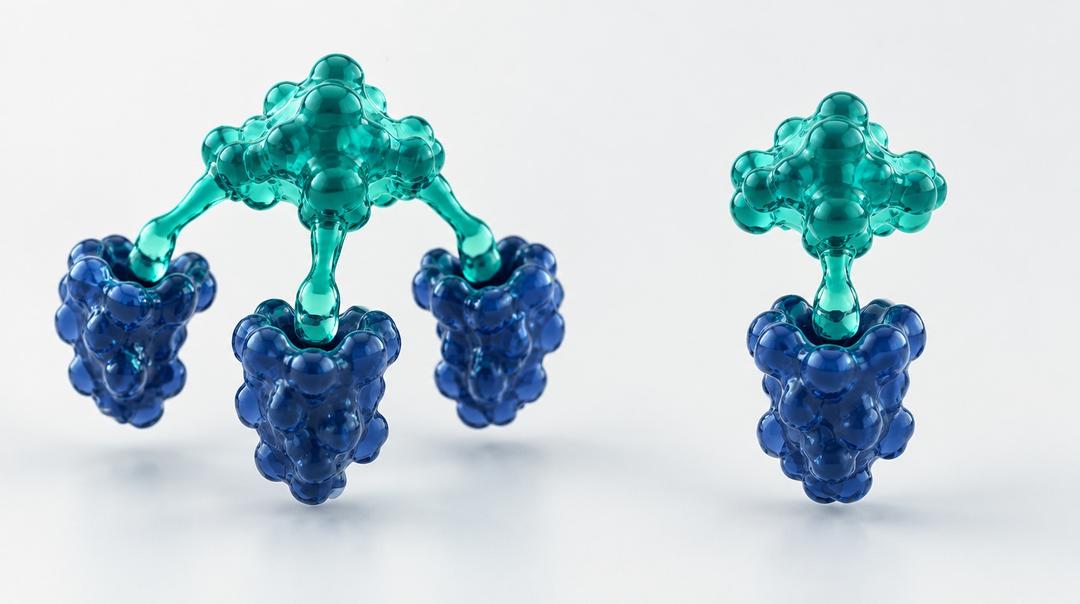
Semaglutide, developed by Novo Nordisk, is a selective agonist of the GLP-1 receptor. Retatrutide, developed by Eli Lilly as LY3437943, is a single peptide with agonist activity at the GIP, GLP-1 and glucagon receptors. Glucagon is the unusual addition, because its textbook action is to raise blood glucose. The rationale in the literature is that glucagon receptor activity also acts on hepatic fat handling and energy expenditure, while the two incretin arms handle glycaemic control. That is a mechanistic hypothesis. The retatrutide overview sets out the pharmacology, and the open question is whether the third receptor earns its place at an acceptable cost.
Side by side
| Semaglutide | Retatrutide | |
|---|---|---|
| Identity | GLP-1 analogue (Novo Nordisk) | Single peptide agonist, LY3437943 (Eli Lilly) |
| Class | Selective GLP-1 receptor agonist | GIP, GLP-1 and glucagon receptor triple agonist |
| Mechanism | Incretin signalling: insulin secretion, appetite | Incretin signalling plus glucagon receptor activity |
| Evidence stage | Phase 3 programmes completed; cardiovascular outcomes trial (SELECT) published | Phase 2 and early phase 3 published; outcomes trial running |
| Regulatory status | Authorised in Canada as Ozempic (type 2 diabetes) and Wegovy (chronic weight management) | Approved by no regulator, for any use |
| What was measured | Weight, HbA1c, cardiovascular events | Weight, HbA1c, knee pain and sleep apnoea scores in nested trials |
| Head-to-head | TRANSCEND-T2D-2 comparator | TRANSCEND-T2D-2 test drug; no results yet |
Is there a head-to-head trial of retatrutide and semaglutide?
One is registered. TRANSCEND-T2D-2 (NCT06260722) randomises adults with type 2 diabetes inadequately controlled on metformin, with or without an SGLT2 inhibitor, to one of two retatrutide dose levels or to semaglutide. The primary endpoint is change in HbA1c at week 80, with an estimated 1,250 participants. The registry lists it as open-label, active and no longer recruiting, with primary completion reached on 27 August 2026 and overall completion expected in 2027. No results are posted and no paper was found on PubMed as of October 2026.
Three features shape what it will be able to say. It enrols people with type 2 diabetes, so it will not directly answer the obesity question. Its primary endpoint is glycaemic. And it is open-label, which matters little for a laboratory value like HbA1c and more for anything subjective. There is no registered head-to-head trial of the two in obesity without diabetes. TRIUMPH-5, the first obesity head-to-head in the retatrutide programme, compares it with tirzepatide, not semaglutide; the TRIUMPH article lists the full programme.
What did each drug's own trials report?
Read each of these within its own trial. They are placed near each other here so that the differences in design are visible, not so that the percentages can be subtracted.
Semaglutide, STEP 1. 1,961 adults with obesity or overweight and no diabetes were randomised to semaglutide or placebo, with a lifestyle programme in both arms, for 68 weeks. Mean weight change was −14.9% against −2.4% on placebo. Discontinuation because of gastrointestinal events was 4.5% against 0.8% (Wilding and colleagues, PMID 33567185).
Semaglutide, SELECT. 17,604 adults aged 45 or over with established cardiovascular disease, overweight or obesity and no diabetes were followed for a mean of 39.8 months. The composite of cardiovascular death, non-fatal heart attack or non-fatal stroke occurred in 6.5% on semaglutide and 8.0% on placebo, a hazard ratio of 0.80. Adverse events led to permanent discontinuation in 16.6% against 8.2% (Lincoff and colleagues, PMID 37952131). This is the kind of trial retatrutide does not yet have.
Retatrutide, phase 2 obesity. 338 adults were randomised across several dose levels or placebo for 48 weeks. Mean weight change at 48 weeks ranged from −8.7% to −24.2% across the retatrutide groups, against −2.1% on placebo. Gastrointestinal events were dose-related, and heart rate rose in a dose-dependent way, peaking at 24 weeks (Jastreboff and colleagues, PMID 37366315).
Retatrutide, TRIUMPH-1. 2,339 adults with obesity and no diabetes were randomised for 80 weeks. Across the dose levels studied, mean weight change ran from −17.6% to −25.0% against −3.9% on placebo, analysed with an estimand that counts everyone randomised (Jastreboff and colleagues, PMID 42814954).
Retatrutide, phase 2 type 2 diabetes. This trial included an active comparator, but it was dulaglutide, an older GLP-1 receptor agonist, not semaglutide. Among 281 participants, HbA1c at 24 weeks fell by up to 2.02 percentage points with retatrutide, by 1.41 with dulaglutide, and was essentially unchanged on placebo (Rosenstock and colleagues, PMID 37385280).
The safety side of the retatrutide trials is covered in retatrutide side effects.
Why can't you subtract STEP 1 from TRIUMPH-1?
Because the difference between two trials' results contains everything else that differed between them. STEP 1 ran 68 weeks and TRIUMPH-1 ran 80. Their populations were enrolled years apart, in different countries and with different baseline weights. Their lifestyle programmes differed. And how each handles people who stopped treatment, the estimand, changes the headline figure on its own. Placebo groups lost different amounts of weight, which is a reminder that the background is not constant. The study design guide explains why randomisation inside one trial is what makes a comparison fair.
The tirzepatide case shows why it is worth waiting. When tirzepatide and semaglutide were finally compared directly, in SURPASS-2 and SURMOUNT-5, the result could be checked against the cross-trial impression. They happened to agree. That was a finding, not a guarantee.
What do network meta-analyses add?
A network meta-analysis estimates indirect comparisons by linking trials through shared comparators, usually placebo. Chen and colleagues analysed 58 randomised trials with 24,214 adults without diabetes. Against placebo, the largest estimated weight reduction was for retatrutide (−22.10%), followed by tirzepatide and then the cagrilintide-semaglutide combination, with conventional GLP-1 receptor agonists showing more modest effects. The authors noted that confidence intervals overlapped for several comparisons, that low-certainty evidence suggested higher discontinuation with retatrutide, and that head-to-head evidence was limited (PMID 42688617).
That is a more disciplined comparison than lining up two abstracts, and it is still indirect. It assumes the trials are similar enough to be linked, and the retatrutide estimate rests on a small number of trials. It is a model's estimate, not a measured head-to-head difference.
What is each drug's regulatory status in Canada?
Semaglutide is authorised in Canada as Ozempic for type 2 diabetes and as Wegovy for chronic weight management; Wegovy's original Notice of Compliance was issued in November 2021, and later supplements have added indications. What a future generic would need is covered in generic semaglutide in Canada. Authorised indications are listed in each product monograph and in the Drug Product Database.
Retatrutide is approved by no regulator, for any use. Published phase 3 results are evidence that regulators will weigh; they are not an authorisation. They also describe Lilly's investigational product in screened trial participants, not material sold under the name elsewhere.
Supplied here for laboratory use: Retatrutide. The laboratory's certificate for each lot is linked from its product page. For laboratory research use only.
NovaEvum does not carry semaglutide. Nothing here is medical, dosing, or therapeutic guidance.
Frequently asked questions
Is retatrutide stronger than semaglutide? That has not been measured directly. Retatrutide's trials report larger mean weight reductions than semaglutide's STEP 1, but those trials differed in duration, population and analysis. A network meta-analysis ranked retatrutide first against placebo, with overlapping confidence intervals. The registered head-to-head trial, TRANSCEND-T2D-2, is in type 2 diabetes and has not reported.
When will TRANSCEND-T2D-2 report? The registry lists primary completion as 27 August 2026 and overall study completion as expected in 2027. Results usually appear months after primary completion, first as a company announcement or conference presentation and later in a peer-reviewed journal. As of October 2026, no results were posted on ClinicalTrials.gov or published on PubMed.
Why does semaglutide's cardiovascular trial matter in this comparison? Weight and HbA1c are intermediate measures. SELECT counted heart attacks, strokes and cardiovascular deaths in 17,604 people with existing cardiovascular disease and found fewer events with semaglutide than placebo. Retatrutide's equivalent, TRIUMPH-Outcomes, is still running, so its effect on those events is unknown.
Did any retatrutide trial use an active comparator? Yes. The phase 2 type 2 diabetes trial compared retatrutide with dulaglutide, an older GLP-1 receptor agonist, as well as placebo. HbA1c reductions in the higher retatrutide groups exceeded those with dulaglutide at 24 weeks. Dulaglutide is not semaglutide, so the result cannot stand in for a semaglutide comparison.
Selected Research References
- Wilding JPH, Batterham RL, Calanna S, et al. Once-Weekly Semaglutide in Adults with Overweight or Obesity. New England Journal of Medicine. 2021;384(11):989-1002. pubmed.ncbi.nlm.nih.gov/33567185
- Lincoff AM, Brown-Frandsen K, Colhoun HM, et al. Semaglutide and Cardiovascular Outcomes in Obesity without Diabetes. New England Journal of Medicine. 2023;389(24):2221-2232. pubmed.ncbi.nlm.nih.gov/37952131
- Jastreboff AM, Kaplan LM, Frías JP, et al. Triple-Hormone-Receptor Agonist Retatrutide for Obesity — A Phase 2 Trial. New England Journal of Medicine. 2023;389(6):514-526. pubmed.ncbi.nlm.nih.gov/37366315
- Jastreboff AM, Kaplan LM, Davies MJ, et al. Retatrutide, a Triple Hormone Receptor Agonist, for Treatment of Obesity. New England Journal of Medicine. 2026. pubmed.ncbi.nlm.nih.gov/42814954
- Rosenstock J, Frias J, Jastreboff AM, et al. Retatrutide, a GIP, GLP-1 and glucagon receptor agonist, for people with type 2 diabetes: a randomised, double-blind, placebo and active-controlled, parallel-group, phase 2 trial conducted in the USA. The Lancet. 2023;402(10401):529-544. pubmed.ncbi.nlm.nih.gov/37385280
- Chen D, Ma B, Sun H, et al. Comparative efficacy and safety of glucagon-like peptide 1 based drugs for weight loss in adults with overweight or obesity without diabetes: network meta-analysis of randomised controlled trials. BMJ Medicine. 2026;5(1):e003026. pubmed.ncbi.nlm.nih.gov/42688617
All products sold by NovaEvum are for research and laboratory use only. They are not intended for human or animal consumption, diagnosis, treatment, cure, or prevention of any disease.