
GLP-1 and metabolic
Tirzepatide vs Semaglutide: What the Head-to-Head Trials Showed
AM
· 9 min read
A summary of published research, with citations. It states no amount, schedule or route, and makes no claim about what this compound does in a person. Supplied for laboratory research use only.
On this page · 7 sections
- How do tirzepatide and semaglutide differ at the receptor?
- What did SURPASS-2 compare, and what did it find?
- What did SURMOUNT-5 compare, and what did it find?
- Why not just compare the placebo-controlled trials?
- How did tolerability compare?
- What is their regulatory status in Canada?
- Frequently asked questions
Tirzepatide acts at two receptors, GIP and GLP-1; semaglutide acts at GLP-1 alone. They have been compared directly in two randomised trials. In SURPASS-2, in 1,879 people with type 2 diabetes, tirzepatide lowered HbA1c by 2.01 to 2.30 percentage points against 1.86 with semaglutide over 40 weeks. In SURMOUNT-5, in 751 adults with obesity and no diabetes, mean weight change at 72 weeks was −20.2% with tirzepatide and −13.7% with semaglutide. Gastrointestinal events dominated tolerability with both drugs.
How do tirzepatide and semaglutide differ at the receptor?
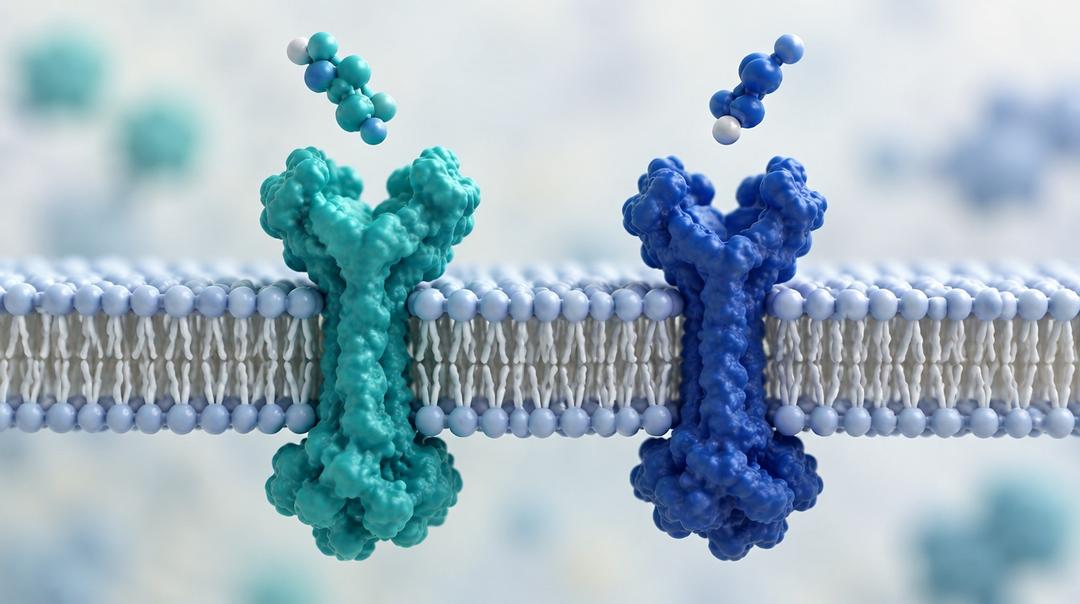
Both are long-acting synthetic peptides built on the incretin system, the gut hormones that amplify insulin release after a meal and act centrally on appetite. Semaglutide is a selective agonist of the GLP-1 receptor. Tirzepatide is a single molecule with agonist activity at both the GLP-1 receptor and the receptor for glucose-dependent insulinotropic polypeptide (GIP). It is not two drugs mixed together, and it is not simply "a stronger GLP-1". The receptor guide sets out what each receptor does, and why receptor count alone does not rank drugs.
The receptor difference is the hypothesis. Whether it matters clinically is a question only a randomised comparison can answer, which is why the two head-to-head trials are worth reading closely rather than the much larger body of placebo-controlled work.
| Semaglutide | Tirzepatide | |
|---|---|---|
| Receptors | GLP-1 | GIP and GLP-1 |
| Developer | Novo Nordisk | Eli Lilly |
| Brand names in Canada | Ozempic (type 2 diabetes), Wegovy (weight management) | Mounjaro (type 2 diabetes and weight management) |
| Head-to-head in type 2 diabetes | SURPASS-2 comparator | SURPASS-2 test drug |
| Head-to-head in obesity | SURMOUNT-5 comparator | SURMOUNT-5 test drug |
What did SURPASS-2 compare, and what did it find?
SURPASS-2 was an open-label phase 3 trial that randomised 1,879 adults with type 2 diabetes to one of three tirzepatide dose levels or to semaglutide, and followed them for 40 weeks. At baseline mean HbA1c was 8.28%, mean age 56.6 years and mean weight 93.7 kg. The primary endpoint was change in HbA1c.
HbA1c fell by 2.01, 2.24 and 2.30 percentage points across the tirzepatide groups and by 1.86 points with semaglutide. The between-group differences were −0.15, −0.39 and −0.45 points, and tirzepatide was both noninferior and superior at all three dose levels. Weight fell further with tirzepatide too: estimated treatment differences against semaglutide were −1.9, −3.6 and −5.5 kg.
Two caveats change how far this travels. First, the semaglutide arm used the dose level then used for diabetes, which is lower than the level later studied in obesity. SURPASS-2 compares tirzepatide with one level of semaglutide, not with semaglutide at its most intensive. Second, the trial was open-label and funded by Eli Lilly, the maker of tirzepatide. Neither invalidates a laboratory-measured endpoint like HbA1c, but both matter for softer outcomes.
What did SURMOUNT-5 compare, and what did it find?
SURMOUNT-5 was built to answer the obvious objection to SURPASS-2. It was a phase 3b open-label trial in 751 adults with obesity but without type 2 diabetes. Each participant was titrated to the highest tolerated level of their assigned drug, so semaglutide was given its full chance. Treatment ran for 72 weeks, with percent change in weight as the primary endpoint.
Mean weight change was −20.2% (95% CI −21.4 to −19.1) with tirzepatide and −13.7% (95% CI −14.9 to −12.6) with semaglutide. Waist circumference fell by 18.4 cm against 13.0 cm. Participants on tirzepatide were more likely to reach every prespecified threshold, from 10% weight reduction up to 25%. The most common adverse events in both groups were gastrointestinal, mostly mild to moderate, and concentrated during dose escalation.
SURMOUNT-5 is the cleanest evidence that the two drugs differ in weight reduction in this population. It was also open-label, funded by Lilly and run in people without diabetes, so it says nothing directly about glycaemic outcomes or about people with type 2 diabetes. In incretin trials, weight reduction has generally been smaller in people with diabetes than in people without.
Why not just compare the placebo-controlled trials?
Because the numbers come from different systems. SURMOUNT-1 reported mean weight change of −15.0%, −19.5% and −20.9% across tirzepatide groups against −3.1% on placebo at 72 weeks, in 2,539 adults without diabetes. STEP 1 reported −14.9% with semaglutide against −2.4% on placebo at 68 weeks, in 1,961 adults without diabetes. Setting those side by side looks like a comparison. It is not one. Durations, baseline weights, regions, lifestyle programmes and the handling of participants who stopped treatment all differ between trials. The study design guide explains why randomisation within one trial is what makes a comparison fair.
Here the head-to-head and the cross-trial pictures happen to point in the same direction. That is reassuring, but it is luck, not method. When tirzepatide and retatrutide are compared, there is no head-to-head yet to check the cross-trial impression against.
How did tolerability compare?
Gastrointestinal effects define tolerability for both drugs, and in SURPASS-2 they were similar in kind and frequency:
| Event in SURPASS-2 | Tirzepatide (range across dose groups) | Semaglutide |
|---|---|---|
| Nausea | 17–22% | 18% |
| Diarrhoea | 13–16% | 12% |
| Vomiting | 6–10% | 8% |
| Hypoglycaemia below 54 mg/dL | 0.2–1.7% | 0.4% |
| Serious adverse events | 5–7% | 3% |
Two points are worth drawing out. The gastrointestinal rates overlap almost entirely, so the larger glycaemic and weight effect did not come with an obviously larger gastrointestinal burden at these levels. Serious adverse events were numerically more frequent with tirzepatide. The abstract does not attribute them to the drug, and a trial of this size cannot resolve the difference.
In STEP 1, 4.5% of semaglutide recipients stopped treatment because of gastrointestinal events, against 0.8% on placebo. In SURMOUNT-1, adverse events of any kind led to discontinuation in 4.3% to 7.1% of tirzepatide recipients, against 2.6% on placebo. Those are different measures from different trials and should not be read as a ranking. A pooled analysis of SURPASS-1 to -5, covering 6,263 participants with type 2 diabetes, found that weight reduction with tirzepatide was similar whether or not participants reported nausea, vomiting or diarrhoea. That argues against the idea that the larger weight effect is simply a product of feeling unwell. The tirzepatide side-effects article goes through the safety record in detail.
What is their regulatory status in Canada?
Both are authorised medicines in Canada, which sets them apart from most compounds discussed on this site. Semaglutide is authorised as Ozempic for type 2 diabetes and as Wegovy for chronic weight management. Tirzepatide is authorised as Mounjaro for type 2 diabetes and for chronic weight management. Each product's authorised indications, warnings and conditions are set out in its Canadian product monograph, and authorisation status is searchable in Health Canada's Drug Product Database. Status and indications change, so check the database rather than relying on any article, including this one.
Authorisation attaches to a specific product from a specific manufacturer. It does not attach to the molecule wherever it appears. A product sold as "semaglutide" or "tirzepatide" outside that system has none of the authorised product's manufacturing controls, as the article on generic semaglutide in Canada explains.
Supplied here for laboratory use: Tirzepatide. The laboratory's certificate for each lot is linked from its product page. For laboratory research use only.
NovaEvum does not carry semaglutide. Research-grade tirzepatide is a laboratory reagent. It is not Mounjaro, and the trial results above describe the licensed product in trial participants, not any reagent. Nothing here is medical, dosing, or therapeutic guidance.
Frequently asked questions
Is tirzepatide better than semaglutide? In the two head-to-head trials, tirzepatide produced larger HbA1c reductions in type 2 diabetes and larger weight reductions in obesity without diabetes. "Better" also depends on tolerability, long-term outcomes and the individual, which those trials were not designed to settle. Both trials were open-label and funded by tirzepatide's manufacturer.
Why did SURPASS-2 get criticised? Its semaglutide arm used the level then used for type 2 diabetes, which is lower than the level later studied for weight management. That left open whether tirzepatide simply beat an under-intensified comparator. SURMOUNT-5 addressed this by titrating both drugs to the highest tolerated level, and tirzepatide still produced greater weight reduction.
Do the two drugs have different side effects? Their adverse-event profiles are similar in kind: nausea, diarrhoea, vomiting and constipation, mostly during escalation. In SURPASS-2 the gastrointestinal rates overlapped almost completely. Serious adverse events were numerically more frequent with tirzepatide, but the trial was not large enough to say whether that difference was real.
Has any trial compared them on heart attacks or strokes? No head-to-head outcomes trial has been published. Each drug has its own cardiovascular outcomes evidence against a different comparator. Tirzepatide's dedicated trial compared it with dulaglutide, covered in the cardiovascular outcomes article. Those results cannot be combined into a ranking.
Is semaglutide or tirzepatide approved in Canada for weight loss? Both have Canadian authorisations for chronic weight management: semaglutide as Wegovy, and tirzepatide under the Mounjaro brand. Indications differ in detail and can change, so the product monograph and Health Canada's Drug Product Database are the sources to check, not a summary.
Selected Research References
- Frías JP, Davies MJ, Rosenstock J, et al.; SURPASS-2 Investigators. Tirzepatide versus Semaglutide Once Weekly in Patients with Type 2 Diabetes. New England Journal of Medicine. 2021;385(6):503-515. pubmed.ncbi.nlm.nih.gov/34170647
- Aronne LJ, Horn DB, le Roux CW, et al.; SURMOUNT-5 Trial Investigators. Tirzepatide as Compared with Semaglutide for the Treatment of Obesity. New England Journal of Medicine. 2025;393(1):26-36. pubmed.ncbi.nlm.nih.gov/40353578
- Jastreboff AM, Aronne LJ, Ahmad NN, et al.; SURMOUNT-1 Investigators. Tirzepatide Once Weekly for the Treatment of Obesity. New England Journal of Medicine. 2022;387(3):205-216. pubmed.ncbi.nlm.nih.gov/35658024
- Wilding JPH, Batterham RL, Calanna S, et al.; STEP 1 Study Group. Once-Weekly Semaglutide in Adults with Overweight or Obesity. New England Journal of Medicine. 2021;384(11):989-1002. pubmed.ncbi.nlm.nih.gov/33567185
- Patel H, Khunti K, Rodbard HW, et al. Gastrointestinal adverse events and weight reduction in people with type 2 diabetes treated with tirzepatide in the SURPASS clinical trials. Diabetes, Obesity and Metabolism. 2024;26(2):473-481. pubmed.ncbi.nlm.nih.gov/37853960
All products sold by NovaEvum are for research and laboratory use only. They are not intended for human or animal consumption, diagnosis, treatment, cure, or prevention of any disease.