
Glutathione
What Is Glutathione? Structure, Cell Biology, Evidence and Regulatory Status
EW
· 10 min read
A summary of published research, with citations. It states no amount, schedule or route, and makes no claim about what this compound does in a person. Supplied for laboratory research use only.
On this page · 6 sections
Glutathione is a tripeptide of glutamate, cysteine and glycine that every human cell makes for itself, and the most abundant non-protein thiol in mammalian tissue. Its cell biology is among the best-studied in biochemistry. The evidence for supplying it from outside is a different and much smaller literature: a few small human trials, short and mixed, with one long-standing question about whether the intact molecule survives the trip. It is sold as a supplement ingredient in some markets. It is not approved as a medicine by Health Canada or the FDA for any condition.
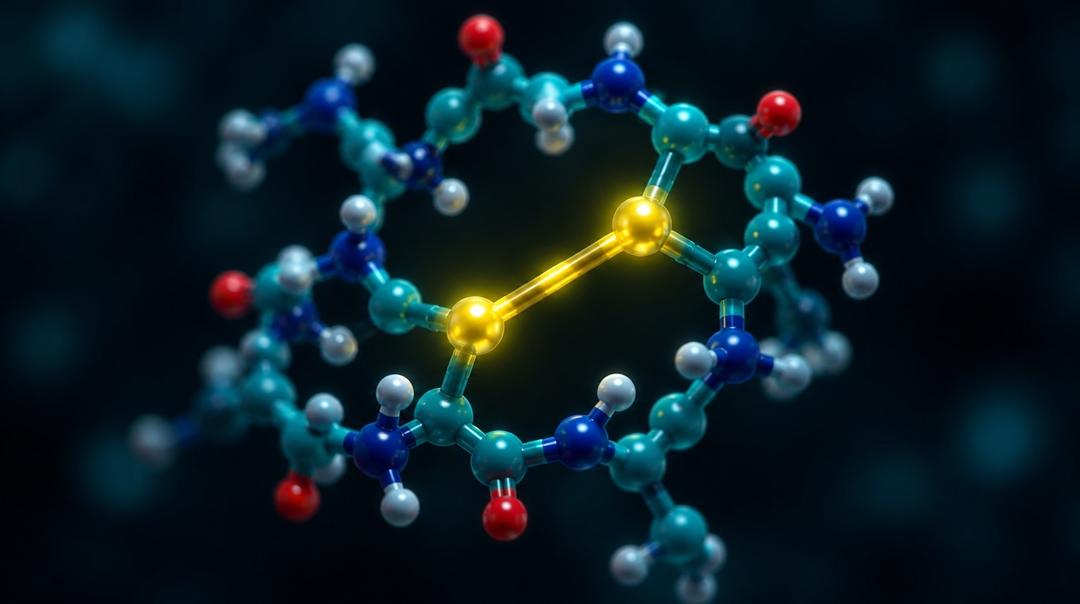
What is glutathione made of?
Three amino acids, joined in an unusual way. The glutamate is linked to cysteine through its side-chain (gamma) carboxyl group, not through the alpha carboxyl that forms an ordinary peptide bond. That is why the full chemical name is γ-glutamyl-cysteinyl-glycine, and why this catalogue prints no one-letter sequence for it: "ECG" would describe a different molecule. Meister and Anderson's review describes how the gamma linkage protects glutathione from ordinary peptidases, leaving its breakdown to a dedicated enzyme, γ-glutamyl transpeptidase, on the outer surface of cells (PMID 6137189).
It is not built on a ribosome. Two ATP-dependent enzymes make it in the cytosol: glutamate-cysteine ligase (GCL) joins glutamate to cysteine, and glutathione synthetase (GS) adds glycine. Lu's review identifies GCL as the rate-limiting enzyme and cysteine supply as the other key limit on how much a cell can make (PMID 22995213).
| Property | Glutathione |
|---|---|
| Structure | γ-L-glutamyl-L-cysteinyl-glycine (gamma bond between the first two residues) |
| Also called | GSH, reduced glutathione, L-glutathione |
| CAS number (PubChem) | 70-18-8 |
| Molecular formula (PubChem) | C10H17N3O6S |
| Molecular weight (PubChem) | About 307 g/mol |
| Origin | Endogenous; made in the cytosol of essentially every cell |
| Evidence stage | Very large cell and animal literature; small, mixed human supplementation trials |
| Regulatory status | Supplement ingredient in some markets; no Health Canada or FDA approval as a medicine |
How is glutathione thought to work?
For an endogenous molecule the question is what it does in cells, and the answer is narrower than "antioxidant" suggests. Most of glutathione's work is as a substrate for enzymes.
Reducing peroxides. Glutathione peroxidases use reduced glutathione (GSH) to reduce hydrogen peroxide and lipid hydroperoxides, producing the disulfide form, GSSG. Brigelius-Flohé and Maiorino count eight mammalian peroxidases, GPx1 to GPx8, and stress that several have roles in signalling and development beyond removing peroxides (PMID 23201771). Glutathione reductase then turns GSSG back into GSH using NADPH.
Conjugation. Glutathione transferases attach glutathione to reactive electrophiles, from environmental chemicals to aldehydes formed during lipid oxidation, so they can be exported. Hayes and colleagues describe three families of these enzymes and their part in making prostaglandins and leukotrienes (PMID 15822171).
A redox buffer. Cells keep the great majority of their glutathione reduced, and the GSH/GSSG ratio is a standard readout of redox state. It differs sharply between compartments: Hwang and colleagues measured a much more oxidised ratio inside the endoplasmic reticulum than in the cell as a whole (PMID 1523409). The chemistry of the two forms is covered in reduced vs oxidized glutathione.
Recycling outside the cell. The gamma-glutamyl cycle, worked out largely in Meister's laboratory, breaks extracellular glutathione into its amino acids so cells can take them back up and rebuild it (PMID 3053703). This is the same machinery that makes supplied glutathione hard to deliver intact, which is the central problem in the next section.
What has glutathione been studied for?
| Area | Evidence stage | What exists |
|---|---|---|
| Redox and detoxification biochemistry | Cell and animal; settled at the level of enzymes | Decades of mechanistic work |
| Paracetamol liver injury | Animal mechanism; clinical practice uses a precursor | Glutathione depletion in rodent liver; the licensed antidote is N-acetylcysteine |
| Whether supplied glutathione raises body stores | Small human trials | Conflicting results |
| Parkinson's disease | Human post-mortem (observational) | Lower glutathione in the substantia nigra |
| Fatty liver disease | One small uncontrolled human pilot | Liver-enzyme endpoint, no comparison group |
| Skin pigmentation | Small, short human trials | Melanin-index endpoints; systematic review |
Paracetamol is where this biology meets clinical practice. In rodents, Mitchell and colleagues tied paracetamol liver necrosis to the depletion of hepatic glutathione (PMID 4746329). The medicine that came out of that work supplies cysteine so the liver can make its own glutathione. It is not glutathione.
Body stores are the open question. Witschi and colleagues gave glutathione to seven healthy volunteers and found no significant rise in plasma glutathione, cysteine or glutamate over the following hours, which they attributed to breakdown by γ-glutamyl transpeptidase in the gut and liver (PMID 1362956). Richie and colleagues ran a six-month randomised placebo-controlled trial in 54 adults and reported higher glutathione in blood, red cells, plasma, lymphocytes and cheek cells, falling back to baseline after a month off (PMID 24791752). Allen and Bradley's four-week randomised trial in 40 healthy adults found no change in urinary oxidative-stress markers or in red-cell glutathione (PMID 21875351). Those results have not been reconciled. The fuller account is in glutathione and oxidative stress.
Parkinson's disease. Sian and colleagues measured glutathione in post-mortem brain and reported reduced GSH in the substantia nigra in Parkinson's disease, a change not seen in other disorders with similar nigral cell loss (PMID 8080242). That is a measurement in tissue from people who had the disease. It does not show that low glutathione causes it, or that supplying it changes anything.
Fatty liver. Honda and colleagues enrolled 34 patients with non-alcoholic fatty liver disease in an open-label, single-arm pilot. Twenty-nine finished. The primary endpoint, the liver enzyme ALT, fell after glutathione was added to a lifestyle-change period (PMID 28789631). With no control group, the design cannot separate glutathione from time, lifestyle change or regression to the mean, and the authors called for larger trials.
Skin pigmentation is where most of the commercial demand sits. Arjinpathana and Asawanonda randomised 60 medical students to glutathione or placebo for four weeks. The melanin index fell at all six measured sites, but the difference from placebo was significant at only two (PMID 20524875). Sarkar and colleagues' 2025 systematic review found a small set of trials, roughly evenly split between low and high risk of bias, and described any lightening as not sustained (PMID 39444151).
Is glutathione approved anywhere?
Not as a medicine for any of the uses above. We found no approval by Health Canada or the FDA for glutathione as a drug for any indication. It is sold as a supplement ingredient in some markets, which is a separate legal category and involves no finding that it works. In Canada, drug status can be checked in the Drug Product Database, and natural health product licences in the Licensed Natural Health Products Database. The wider framework is in peptides and Canadian law.
Regulators have also commented on quality. In 2019 the FDA warned compounding pharmacies not to use a glutathione powder labelled as a dietary supplement to make sterile preparations. Its laboratory found excessive bacterial endotoxin in every sample tested, and it described adverse events, including a hospitalisation, consistent with endotoxin exposure. That is a statement about one supply chain's quality, not a trial result, but it is part of the record. How compounded and research-grade material differ is set out in compounded vs research peptides.
What is glutathione commonly confused with?
N-acetylcysteine (NAC). NAC is a modified form of cysteine, the amino acid that limits glutathione synthesis. It is a licensed medicine for paracetamol overdose, and that licence rests on its role as a precursor. Findings about NAC are not findings about glutathione, and the reverse is also true. Combined precursor work, glycine with NAC, has been tested in a small randomised trial in 24 older adults with a wide panel of endpoints (PMID 35975308). That trial tests the precursor strategy, not the tripeptide.
GSSG. Oxidised glutathione is two GSH molecules joined by a disulfide bond. It has a different formula and molecular weight, and a lab result should say which form was measured.
A proven "skin whitening" agent. That label comes from marketing, not from regulators. The trials behind it are small, short, and use melanin-index endpoints. A role in the switch between melanin types is a fact about biochemistry, not a demonstrated cosmetic effect.
A general "detox" molecule. Glutathione transferases do conjugate specific electrophiles. That enzyme chemistry does not support claims that supplied glutathione cleanses the body.
NAD+. Another endogenous cofactor with a huge basic literature and thin evidence for supplying it from outside; see NAD+ and mitochondrial research.
Supplied here for laboratory use: Glutathione. No certificate of analysis for this compound is published on this site yet. For laboratory research use only.
The findings above describe the compound in the animals and people studied, not any laboratory reagent. Nothing here is medical, dosing, or therapeutic guidance.
Frequently asked questions
Why does it matter that glutathione has a gamma bond? Because it changes how the molecule is handled. The gamma-glutamyl linkage resists ordinary peptidases, so glutathione is stable inside cells, but a dedicated enzyme, γ-glutamyl transpeptidase, cleaves it on cell surfaces in the gut, liver and kidney. That enzyme is the main reason supplied glutathione may be broken into amino acids before it reaches the cells it is meant for.
Is glutathione a peptide? It is a tripeptide in composition, but not an ordinary one. It is made by two enzymes rather than on a ribosome, and its first bond uses glutamate's side chain. Writing it as the sequence ECG would describe a different molecule.
Does supplied glutathione raise levels in the body? The trials disagree. A small 1992 study found no rise in plasma, a six-month randomised trial reported higher levels in several blood compartments, and a four-week randomised trial found no change. All were small, and the question remains open.
Is glutathione the same as NAC? No. NAC is a modified form of cysteine, one of glutathione's building blocks, and is a licensed medicine for paracetamol overdose. Its approval rests on supplying cysteine so cells can make their own glutathione. It is not evidence about glutathione itself.
Is glutathione legal in Canada? It has no Canadian authorisation as a drug for any indication. Glutathione sold here is a laboratory chemical for research use only. It is not a medicine or a natural health product, and it is not for human consumption.
Selected Research References
- Meister A, Anderson ME. Glutathione. Annual Review of Biochemistry. 1983;52:711-760. pubmed.ncbi.nlm.nih.gov/6137189
- Lu SC. Glutathione synthesis. Biochimica et Biophysica Acta. 2013;1830(5):3143-3153. pubmed.ncbi.nlm.nih.gov/22995213
- Brigelius-Flohé R, Maiorino M. Glutathione peroxidases. Biochimica et Biophysica Acta. 2013;1830(5):3289-3303. pubmed.ncbi.nlm.nih.gov/23201771
- Hayes JD, Flanagan JU, Jowsey IR. Glutathione transferases. Annual Review of Pharmacology and Toxicology. 2005;45:51-88. pubmed.ncbi.nlm.nih.gov/15822171
- Hwang C, Sinskey AJ, Lodish HF. Oxidized redox state of glutathione in the endoplasmic reticulum. Science. 1992;257(5076):1496-1502. pubmed.ncbi.nlm.nih.gov/1523409
- Meister A. Glutathione metabolism and its selective modification. Journal of Biological Chemistry. 1988;263(33):17205-17208. pubmed.ncbi.nlm.nih.gov/3053703
- Mitchell JR, Jollow DJ, Potter WZ, et al. Acetaminophen-induced hepatic necrosis. IV. Protective role of glutathione. Journal of Pharmacology and Experimental Therapeutics. 1973;187(1):211-217. pubmed.ncbi.nlm.nih.gov/4746329
- Witschi A, Reddy S, Stofer B, Lauterburg BH. The systemic availability of oral glutathione. European Journal of Clinical Pharmacology. 1992;43(6):667-669. pubmed.ncbi.nlm.nih.gov/1362956
- Richie JP Jr, Nichenametla S, Neidig W, et al. Randomized controlled trial of oral glutathione supplementation on body stores of glutathione. European Journal of Nutrition. 2015;54(2):251-263. pubmed.ncbi.nlm.nih.gov/24791752
- Allen J, Bradley RD. Effects of oral glutathione supplementation on systemic oxidative stress biomarkers in human volunteers. Journal of Alternative and Complementary Medicine. 2011;17(9):827-833. pubmed.ncbi.nlm.nih.gov/21875351
- Sian J, Dexter DT, Lees AJ, et al. Alterations in glutathione levels in Parkinson's disease and other neurodegenerative disorders affecting basal ganglia. Annals of Neurology. 1994;36(3):348-355. pubmed.ncbi.nlm.nih.gov/8080242
- Honda Y, Kessoku T, Sumida Y, et al. Efficacy of glutathione for the treatment of nonalcoholic fatty liver disease: an open-label, single-arm, multicenter, pilot study. BMC Gastroenterology. 2017;17(1):96. pubmed.ncbi.nlm.nih.gov/28789631
- Arjinpathana N, Asawanonda P. Glutathione as an oral whitening agent: a randomized, double-blind, placebo-controlled study. Journal of Dermatological Treatment. 2012;23(2):97-102. pubmed.ncbi.nlm.nih.gov/20524875
- Sarkar R, Yadav V, Yadav T, et al. Glutathione as a skin-lightening agent and in melasma: a systematic review. International Journal of Dermatology. 2025;64(6):992-1004. pubmed.ncbi.nlm.nih.gov/39444151
- Kumar P, Liu C, Suliburk J, et al. Supplementing Glycine and N-Acetylcysteine (GlyNAC) in Older Adults Improves Glutathione Deficiency, Oxidative Stress, Mitochondrial Dysfunction, Inflammation, Physical Function, and Aging Hallmarks: A Randomized Clinical Trial. Journals of Gerontology Series A. 2023;78(1):75-89. pubmed.ncbi.nlm.nih.gov/35975308
All products sold by NovaEvum are for research and laboratory use only. They are not intended for human or animal consumption, diagnosis, treatment, cure, or prevention of any disease.