
GLP-1 and metabolic
Retatrutide and Sleep Apnea: What the TRIUMPH-OSA Trials Found
AM
· 7 min read
A summary of published research, with citations. It states no amount, schedule or route, and makes no claim about what this compound does in a person. Supplied for laboratory research use only.
On this page · 7 sections
In October 2026 the New England Journal of Medicine published the first phase 3 results for retatrutide in obstructive sleep apnea: two placebo-controlled trials, TRIUMPH-1-OSA and TRIUMPH-2-OSA, run by Eli Lilly in adults with moderate-to-severe sleep apnea and excess weight, with and without type 2 diabetes. Over 80 weeks, the apnea-hypopnea index fell further on retatrutide than on placebo at every strength tested. It is the first triple-receptor agonist to report sleep apnea results of this kind, and it follows the same path tirzepatide took two years earlier. This is our read of what the trials measured, how large the differences were, and what they leave open.
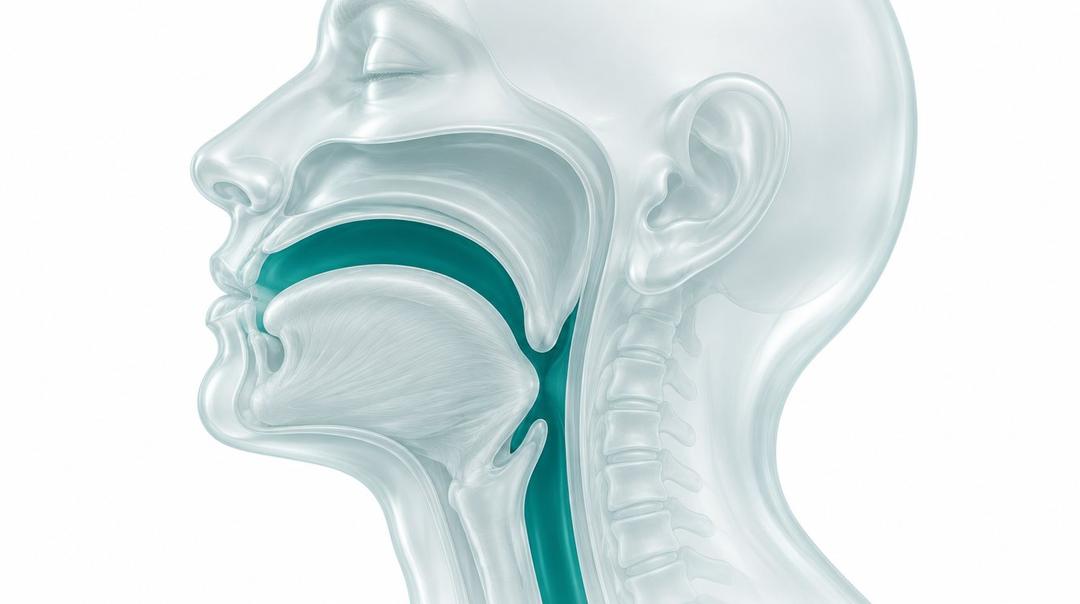
What is obstructive sleep apnea?
During sleep the muscles of the throat relax. In obstructive sleep apnea the upper airway behind the tongue and soft palate narrows or closes repeatedly, so breathing stops or becomes shallow for seconds at a time, oxygen falls, and sleep is broken. Excess weight is one of its strongest risk factors, partly because fat around the neck and tongue narrows the airway.
Severity is measured with the apnea-hypopnea index, or AHI: the average number of breathing stops (apneas) and shallow-breathing episodes (hypopneas) per hour of sleep, recorded in a sleep study. An AHI of 15 to 29 is moderate, 30 or more is severe. The people in these trials started with an average AHI of 56 to 59 events an hour, well into the severe range.
How were the trials designed?
| TRIUMPH-1-OSA | TRIUMPH-2-OSA | |
|---|---|---|
| Participants | 243 adults | 448 adults |
| Type 2 diabetes | No | Yes |
| Starting AHI (average) | 58.6 events/hour | 55.9 events/hour |
| Starting body weight (average) | 119.6 kg | 115.9 kg |
| Comparison | Three strengths of retatrutide vs placebo | Three strengths of retatrutide vs placebo |
| Length | 80 weeks | 80 weeks |
| Main measure | Change in AHI with the two higher strengths | Change in AHI with the two higher strengths |
Both were double-blind and randomised, and both sat inside larger TRIUMPH obesity trials, so the people with sleep apnea were a defined group within a bigger programme. Everyone needed moderate-to-severe sleep apnea and a body-mass index of at least 27. The wider phase 3 programme is covered in retatrutide's TRIUMPH trials.
What did the trials find?
The AHI fell in every group, including placebo, which is common in sleep apnea trials because people taking part lose some weight and change habits. The question is how much further it fell on retatrutide.
| TRIUMPH-1-OSA (no diabetes) | TRIUMPH-2-OSA (diabetes) | |
|---|---|---|
| Placebo | −9.9 events/hour | −10.3 events/hour |
| Lowest strength | −22.9 | −19.2 |
| Middle strength | −34.3 | −24.7 |
| Highest strength | −31.7 | −25.4 |
| Body weight, retatrutide groups | −12.5% to −22.2% | −12.1% to −18.5% |
| Body weight, placebo | −4.8% | −5.6% |
Measured against placebo, the difference was about 22 to 24 fewer events an hour at the two higher strengths in people without diabetes, and about 14 to 15 in people with diabetes. The results held when every randomised participant was counted (an intention-to-treat analysis), not only those who stayed on treatment. The most common side effects were gastrointestinal, as they are for every drug in this class; the full side-effect record from the retatrutide trials is in retatrutide side effects.
Three things in these numbers are worth noticing.
The middle and highest strengths gave similar results. In both trials the highest strength did not go further than the middle one on AHI. In obesity trials the dose-response curve usually keeps climbing; here it flattened.
Diabetes narrowed the gap. People with type 2 diabetes saw smaller differences in both AHI and body weight, the same pattern seen with other incretin drugs.
Most of the change tracks weight. The trials were not built to separate an effect on breathing from the effect of losing weight, and the size of the AHI change rose and fell with the size of the weight change.
How does this compare with tirzepatide?
Tirzepatide went through the same test first. In the SURMOUNT-OSA trials, published in the same journal in 2024 with some of the same investigators, it lowered the AHI more than placebo over 52 weeks in adults with obesity and moderate-to-severe sleep apnea (PMID 38912654), and tirzepatide has since been approved for sleep apnea in the United States. Our summary of that record is in tirzepatide and obstructive sleep apnea.
A direct comparison is not possible. The trials differ in length (80 weeks against 52), in who was enrolled, and in how missing data were handled, and no trial has put the two drugs side by side in sleep apnea. For how the two molecules differ, see tirzepatide vs retatrutide.
What the trials do not tell us
Whether people sleep or feel better in a lasting way. AHI is a count of breathing events, a measure rather than how rested someone feels or whether their heart and blood pressure change over years. Why that distinction matters is explained in surrogate endpoints explained.
What happens after stopping. Weight usually returns when incretin drugs are stopped, and with it, very likely, much of the sleep apnea. These trials did not test that.
How it compares with CPAP. Continuous positive airway pressure remains the standard approach for moderate-to-severe sleep apnea. The trials did not compare against it.
Independent replication. Both trials were funded and run by the developer, Eli Lilly, with several company employees among the authors. That is normal for phase 3 drug trials and the design was strong, but it is worth knowing.
Is retatrutide approved for sleep apnea?
No. As of November 2026, retatrutide is an investigational drug: it is not approved by Health Canada, the FDA or the EMA for sleep apnea, obesity or anything else. Approval would depend on regulators reviewing the full phase 3 programme. Status in Canada can be checked in the Drug Product Database, and the general framework is set out in peptides and Canadian law.
Supplied here for laboratory use: Retatrutide. For laboratory research use only.
The findings above describe the drug in the people studied, not any laboratory reagent. Nothing here is medical, dosing, or therapeutic guidance.
Frequently asked questions
Does retatrutide work for sleep apnea? In two phase 3 trials published in 2026, people on retatrutide had a larger drop in the apnea-hypopnea index than people on placebo over 80 weeks, alongside substantial weight change. Whether that lasts, and how it compares with CPAP, has not been studied.
What is a normal AHI? Fewer than five breathing events an hour is considered normal in adults. Five to 14 is mild, 15 to 29 moderate and 30 or more severe sleep apnea.
Is retatrutide approved for sleep apnea in Canada? No. It is not approved for any use in Canada or elsewhere; it is still in clinical trials.
How is this different from tirzepatide for sleep apnea? Tirzepatide acts on two receptors and retatrutide on three. Tirzepatide's sleep apnea trials came first and it is approved for that use in the United States. The two have not been compared head to head.
Selected Research References
- Grunstein RR, Somers VK, Azarbarzin A, et al. Retatrutide Once Weekly for Treatment of Obstructive Sleep Apnea. New England Journal of Medicine. 2026. pubmed.ncbi.nlm.nih.gov/42904878
- Malhotra A, Grunstein RR, Fietze I, et al. Tirzepatide for the Treatment of Obstructive Sleep Apnea and Obesity. New England Journal of Medicine. 2024;391(13):1193-1205. pubmed.ncbi.nlm.nih.gov/38912654
All products sold by NovaEvum are for research and laboratory use only. They are not intended for human or animal consumption, diagnosis, treatment, cure, or prevention of any disease.