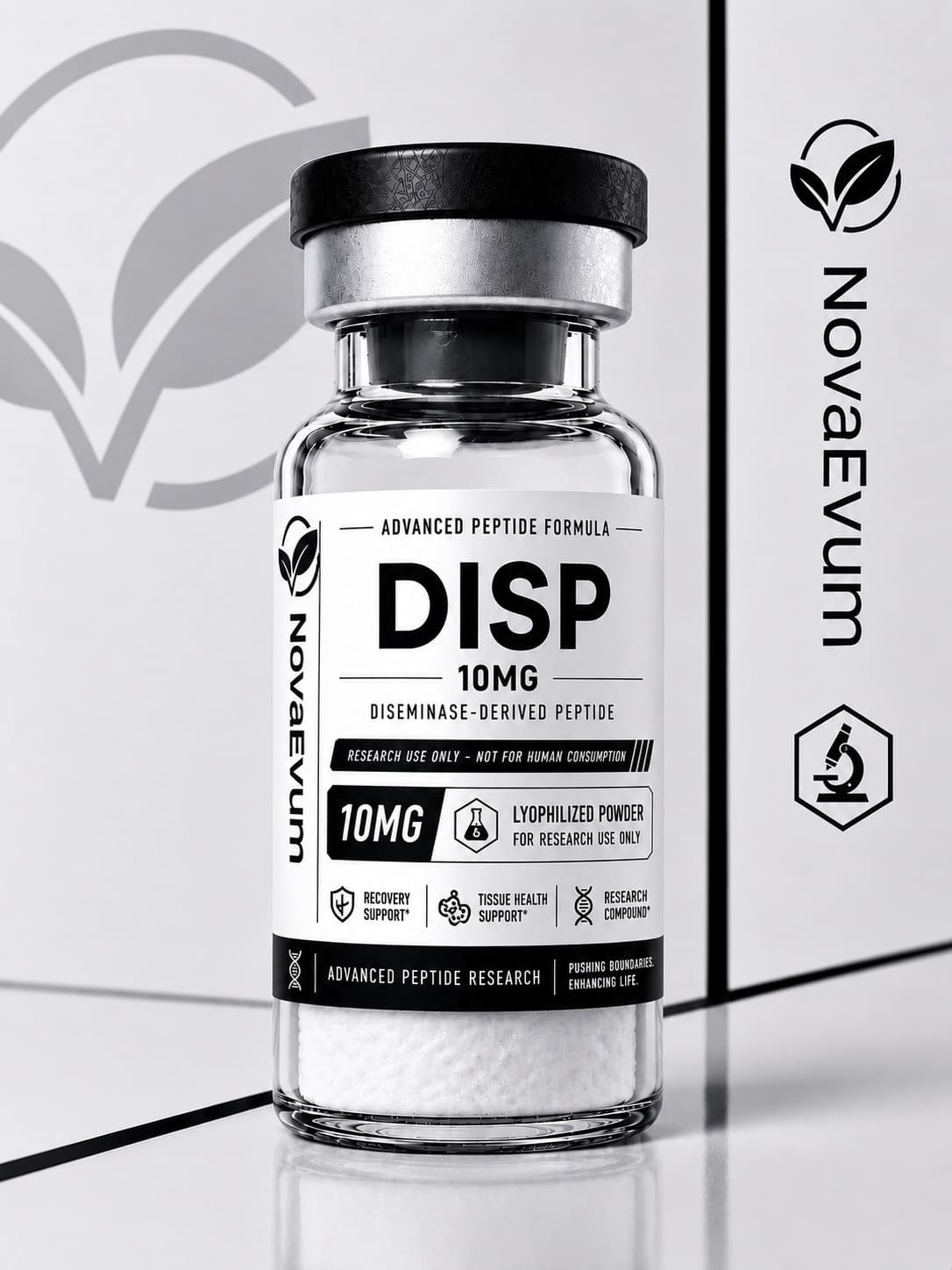
DSIP
Delta sleep-inducing peptide
Each vial contains 10 mg of DSIP.
DSIP, delta sleep-inducing peptide, is a nonapeptide first isolated from rabbit cerebral venous blood in the 1970s, under the hypothesis its name still carries. What that literature measures, and why fifty years of it has not settled the question the name asks, is set out under How it works below.
- Lyophilized powder, requires reconstitution
Price
$50.00 CAD
In stock
Produced & shipped in Canada
Specification
- CAS number
- 62568-57-4
- Molecular formula
- C35H48N10O15
- Molecular weight
- 848.81 g/mol
- Sequence
- WAGGDASGE
- Purity
- ≥ 98.4% by RP-HPLC
- Form
- Lyophilized powder
- Third-party assay
- Purity, fill and endotoxin
- Origin
- Canada
- Storage
- -20 °C, protected from light
- Lot
- NVE-2450-A
How it works
The name is a hypothesis rather than a finding — it records what this nonapeptide was isolated to test in the 1970s, and fifty years of work has not settled the question either way. That non-replication is the defining feature of this literature rather than a footnote to it, which is why it is said first.
Rabbit cerebral venous blood
Where it came from
Isolated in the 1970s from rabbit cerebral venous blood, under the hypothesis the name still carries. An isolation records where a molecule was found and what its discoverers were looking for; it demonstrates nothing about what it does.
EEG sleep architecture
What the animal work measured
Animal studies measure sleep architecture directly by electroencephalography: slow-wave and REM phases, sleep latency, total sleep time. Those are recordings from an animal, and they are not a finding about anybody else sleeping.
The human studies
Sleep and chronic pain
A small number of human studies exist, on sleep and on chronic pain, decades apart and with no programme connecting them. Few, small and old is the honest description of that set, and there is no larger one behind it.
Replication
The state of the whole literature
The findings do not hold consistently between research groups, and have not for fifty years. That is the first thing to know about any individual result in this literature, including the ones above.
Where the evidence stands
Mostly animal, mostly old, and inconsistent between groups. The human studies are few, small and decades apart. Not approved as a medicine, and the name records the hypothesis it was isolated under rather than a demonstrated function.
Laboratory results
Opened as the laboratory issued them, unedited. Every certificate we publish
Research use only
Supplied as a laboratory research chemical. Not a drug, food or cosmetic, and not for human or veterinary use. No application guidance is provided or implied.