KPV
α-MSH 11-13
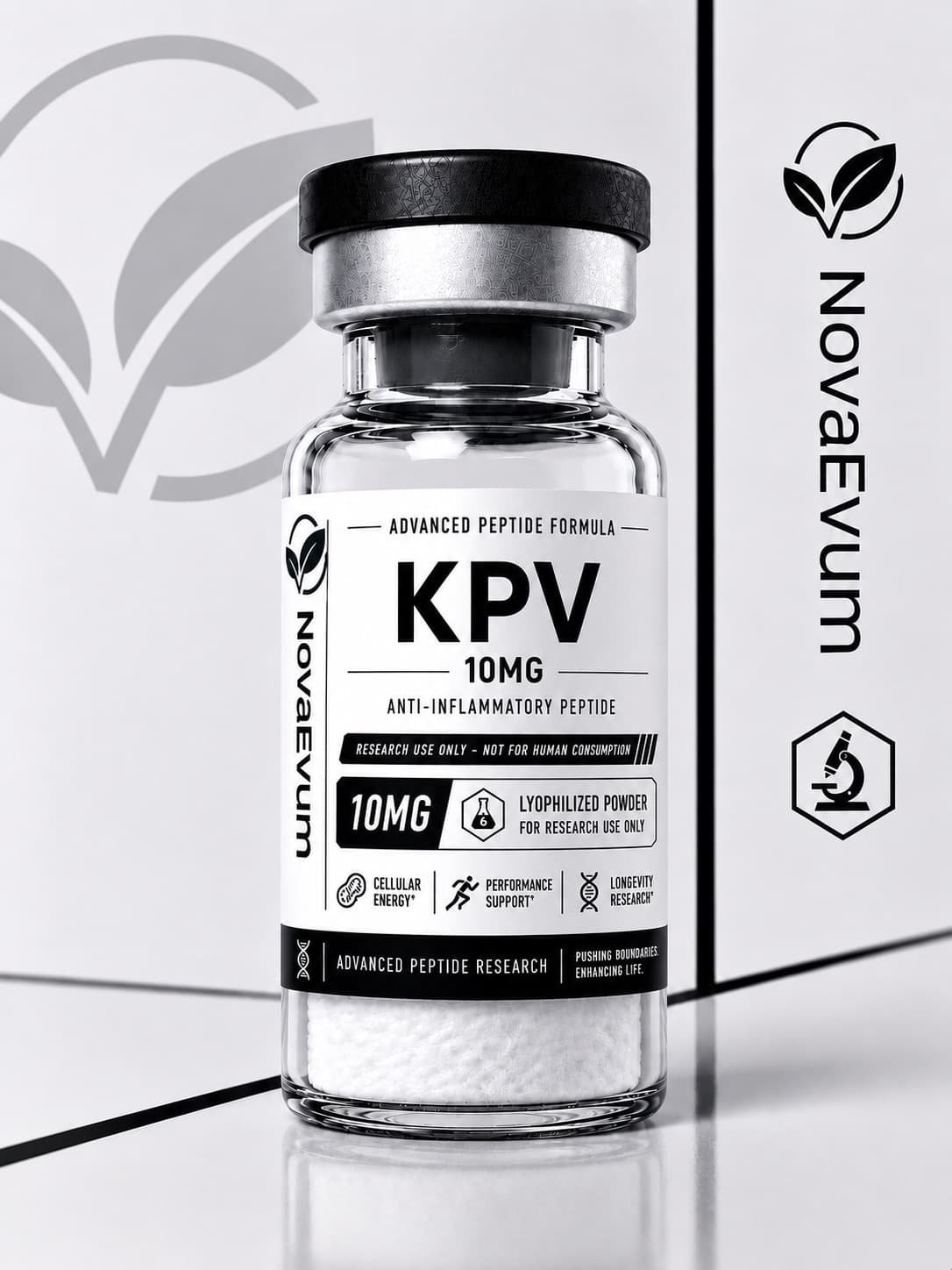
Each vial contains 10 mg of KPV.
KPV is a tripeptide corresponding to the C-terminal three residues of alpha-MSH — lysine, proline and valine — the fragment whose anti-inflammatory signalling is what the cell work examines. Most of the literature is rodent models of colitis and of skin inflammation, together with studies of the NF-κB pathway. No controlled human trials have been published.
- Lyophilized powder, requires reconstitution
Price
$50.00 CAD
In stock
Produced & shipped in Canada
Specification
- CAS number
- 67727-97-3
- Molecular formula
- C16H29N5O4
- Molecular weight
- 355.43 g/mol
- Sequence
- KPV
- Purity
- ≥ 99.3% by RP-HPLC
- Form
- Lyophilized powder
- Third-party assay
- Purity, fill and endotoxin
- Origin
- Canada
- Storage
- -20 °C, protected from light
- Lot
- NVE-2428-A
How it works
Three residues out of a much larger hormone are what carry the anti-inflammatory signalling this literature concerns, which is why they are studied on their own rather than as alpha-MSH. The work divides into cell studies of one pathway and rodent models of two tissues, and it stops there.
NF-κB pathway
What the cell work measures
Cell studies of the NF-κB pathway, and of inflammatory signalling more broadly, are where the fragment was characterised. That is work in culture, not a finding about inflammatory balance in a person.
Rodent colitis models
The gastrointestinal literature
Examined in rodent models of colitis. Gut comfort and digestive discomfort are claims about a person; the papers are about colitis in a rodent.
Rodent skin-inflammation models
The cutaneous literature
Rodent models of skin inflammation are the cutaneous half of that literature. Redness, sensitivity and clearer-looking skin are claims about appearance, and they are not what those models produced.
Where the evidence stands
Preclinical. No controlled human trials have been published. Not approved as a medicine.
Laboratory results
Opened as the laboratory issued them, unedited. Every certificate we publish
Research use only
Supplied as a laboratory research chemical. Not a drug, food or cosmetic, and not for human or veterinary use. No application guidance is provided or implied.